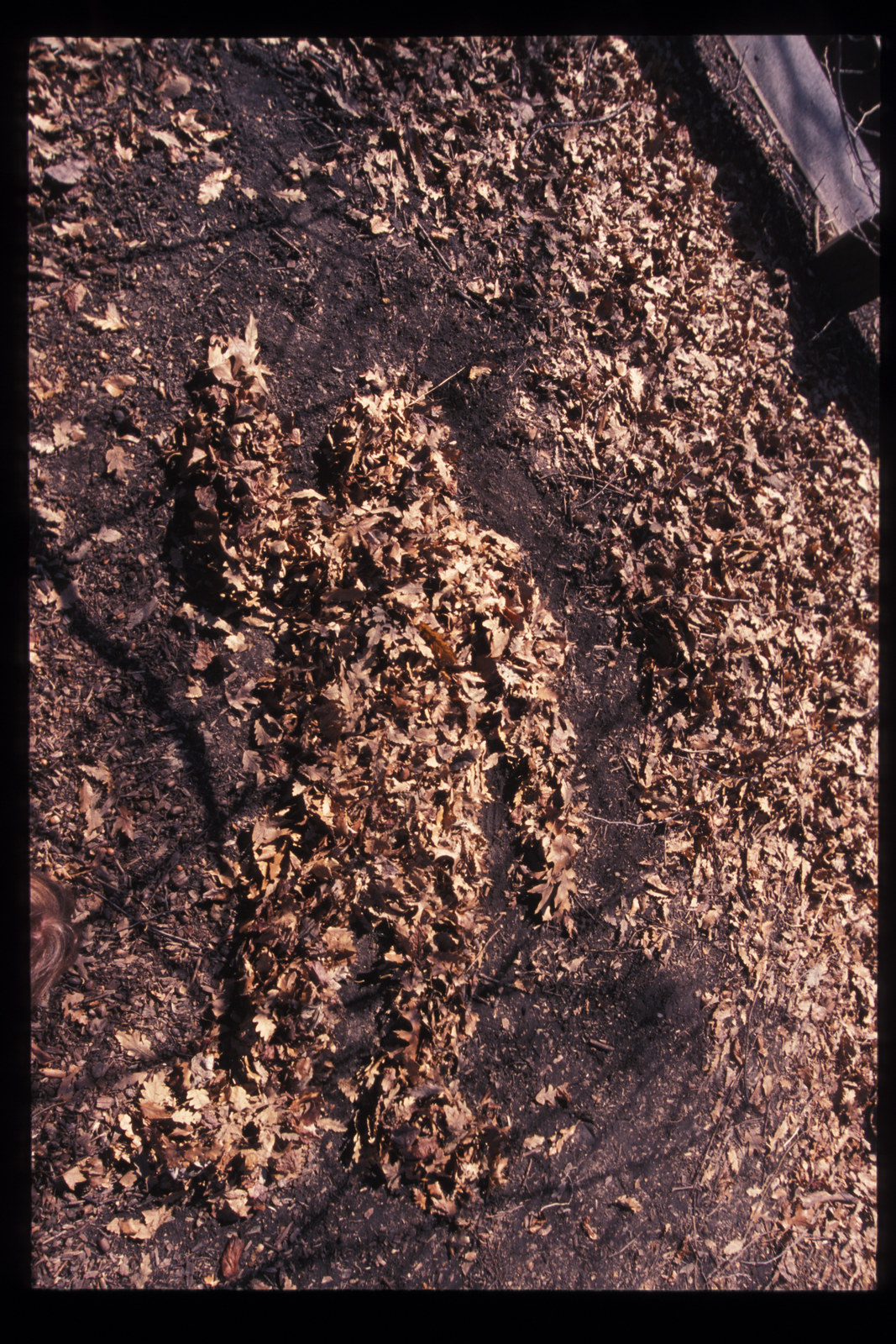
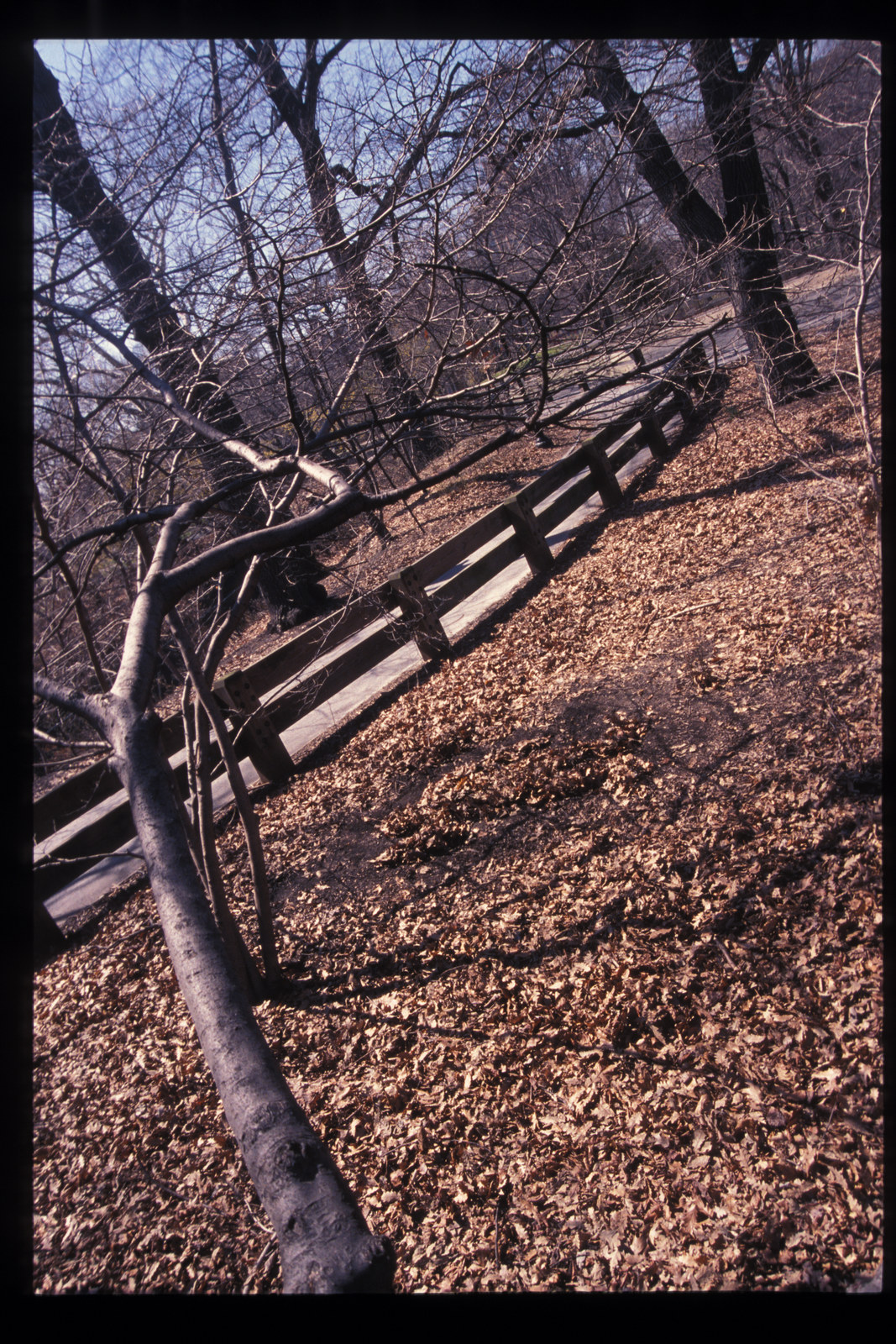
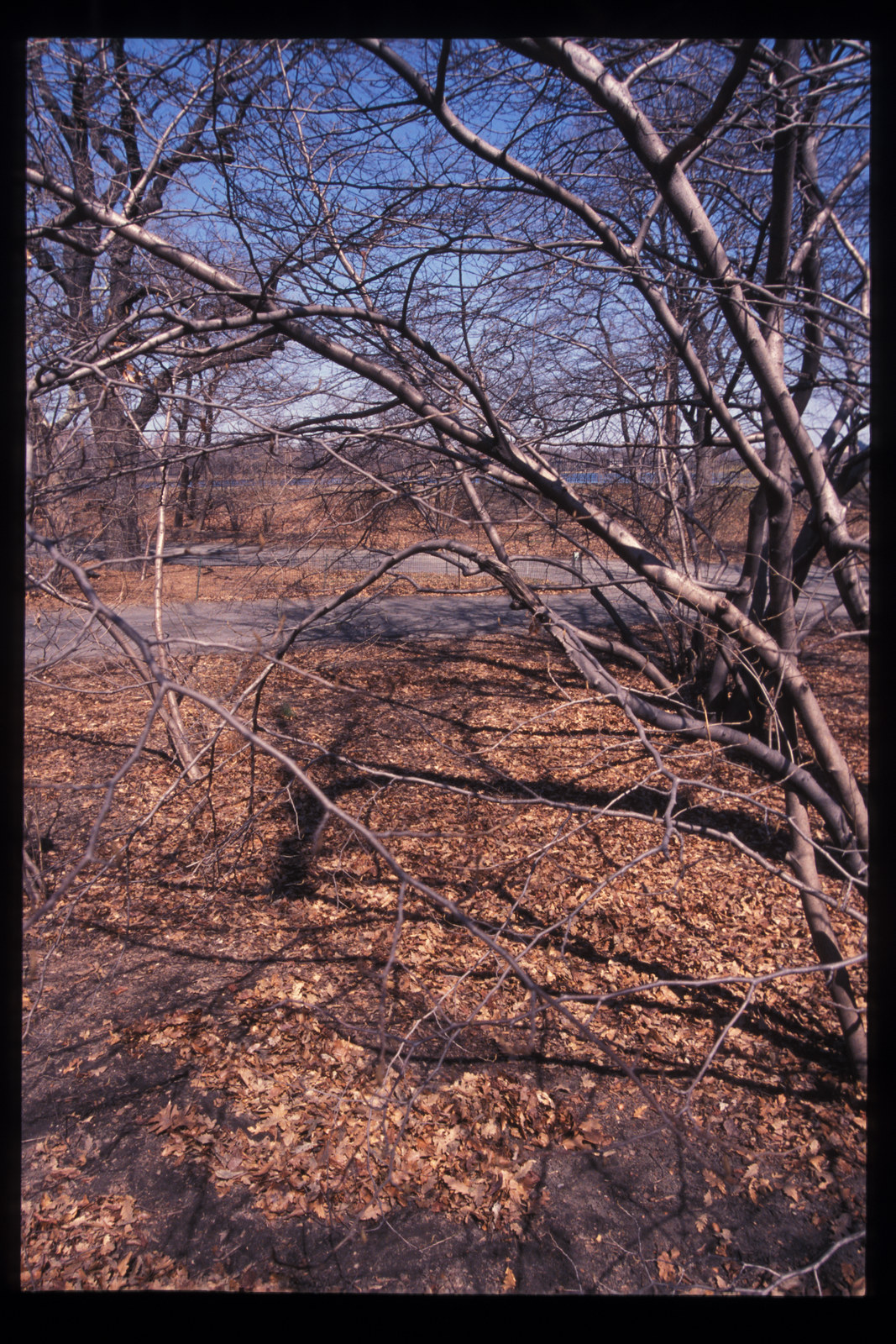
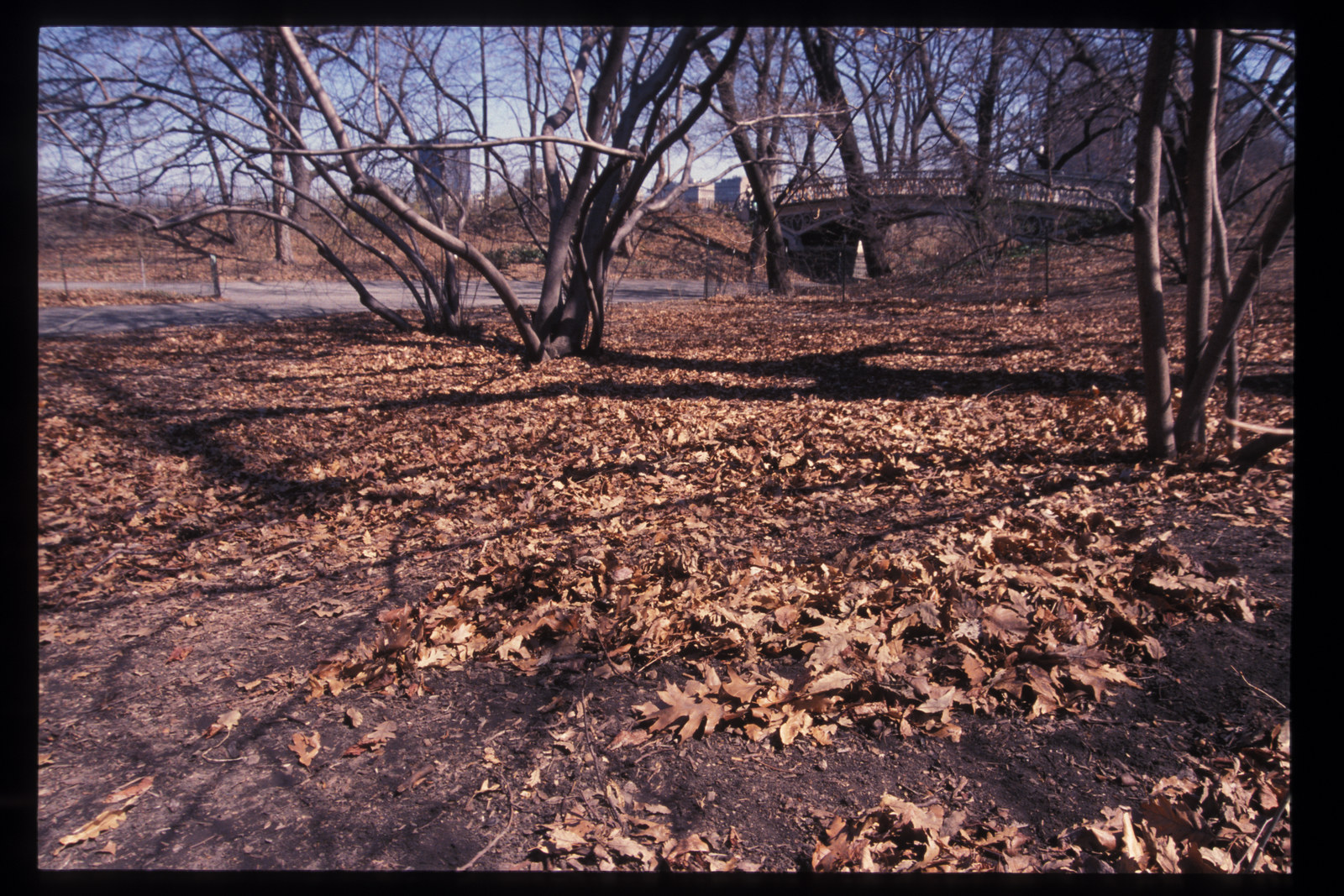
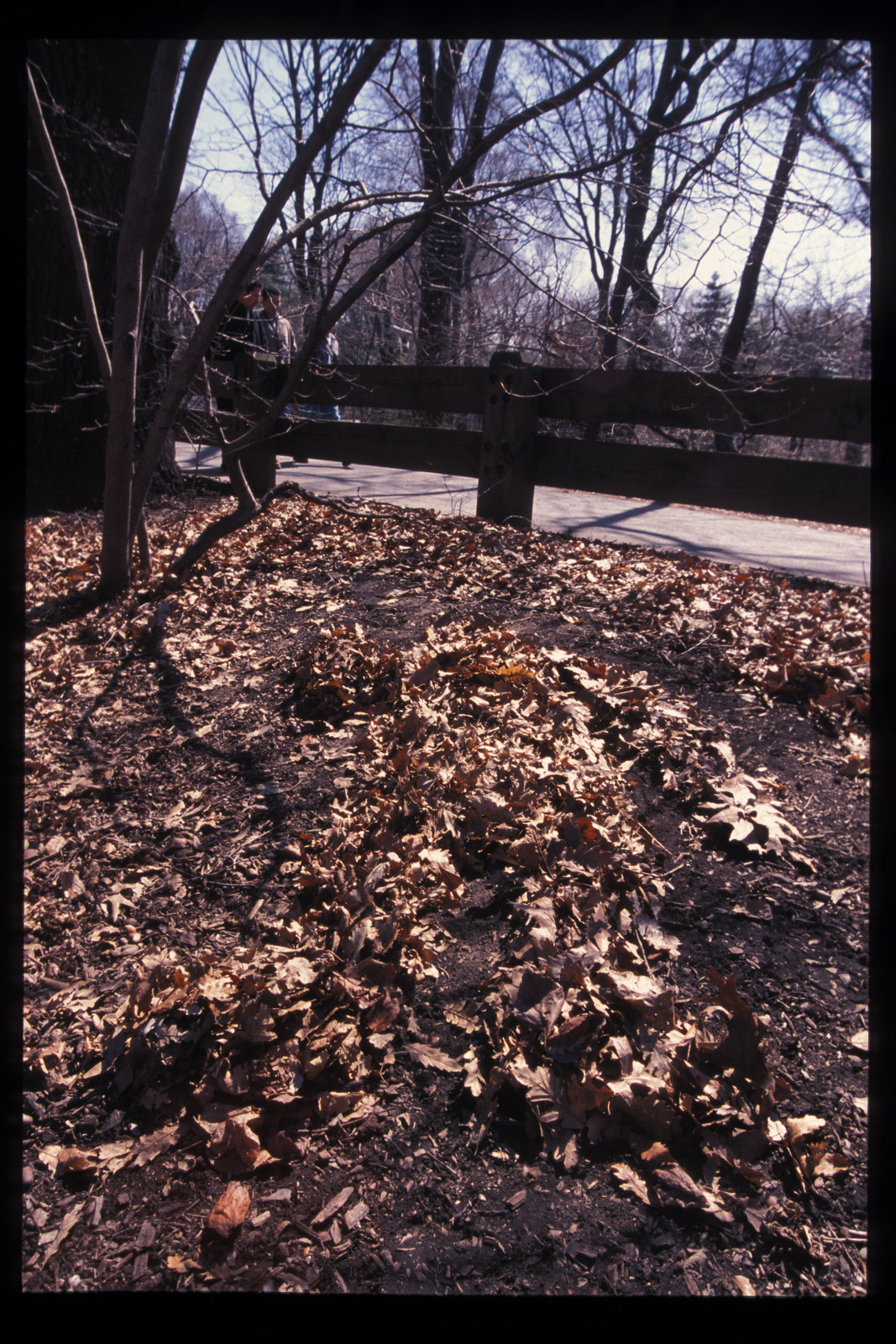
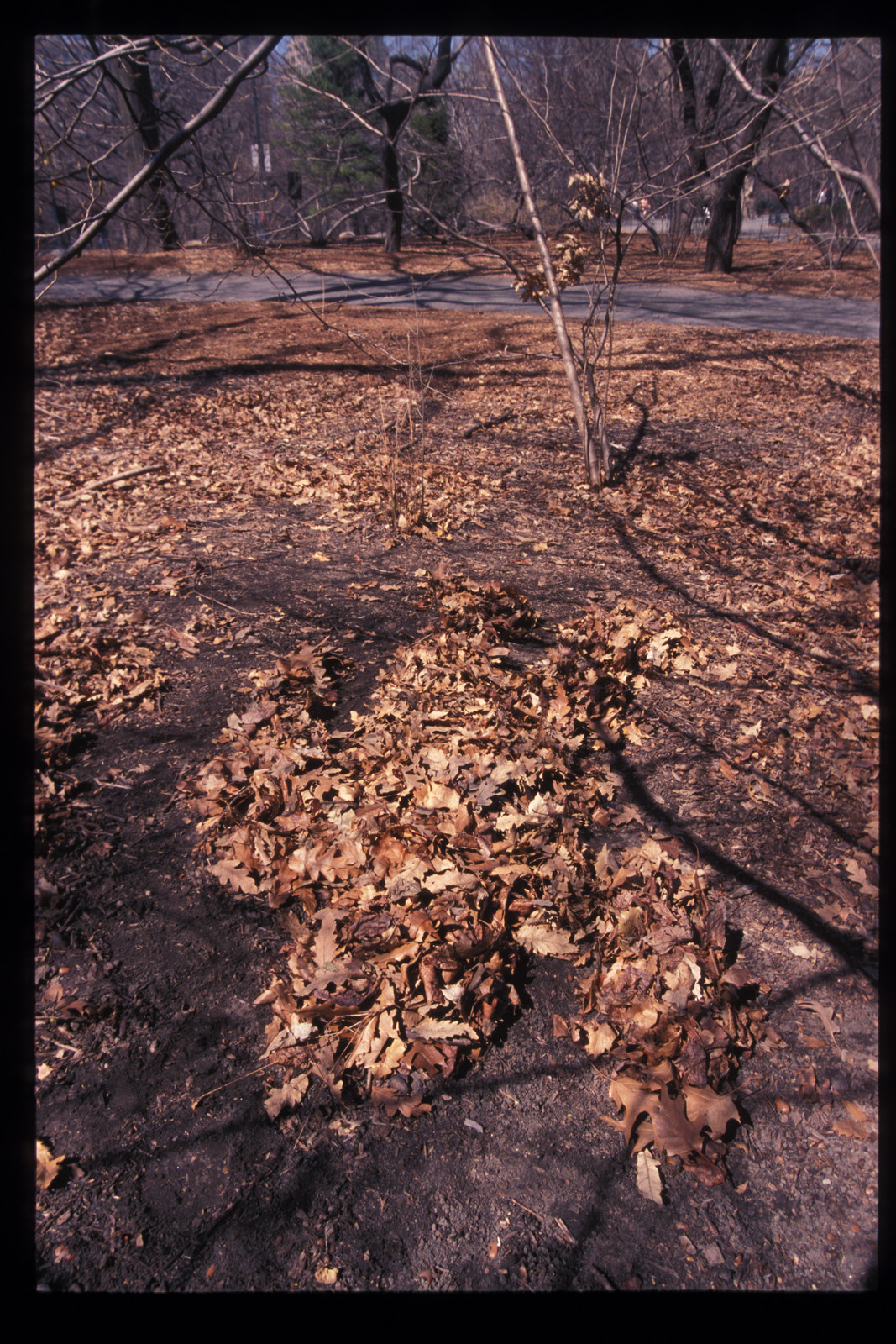
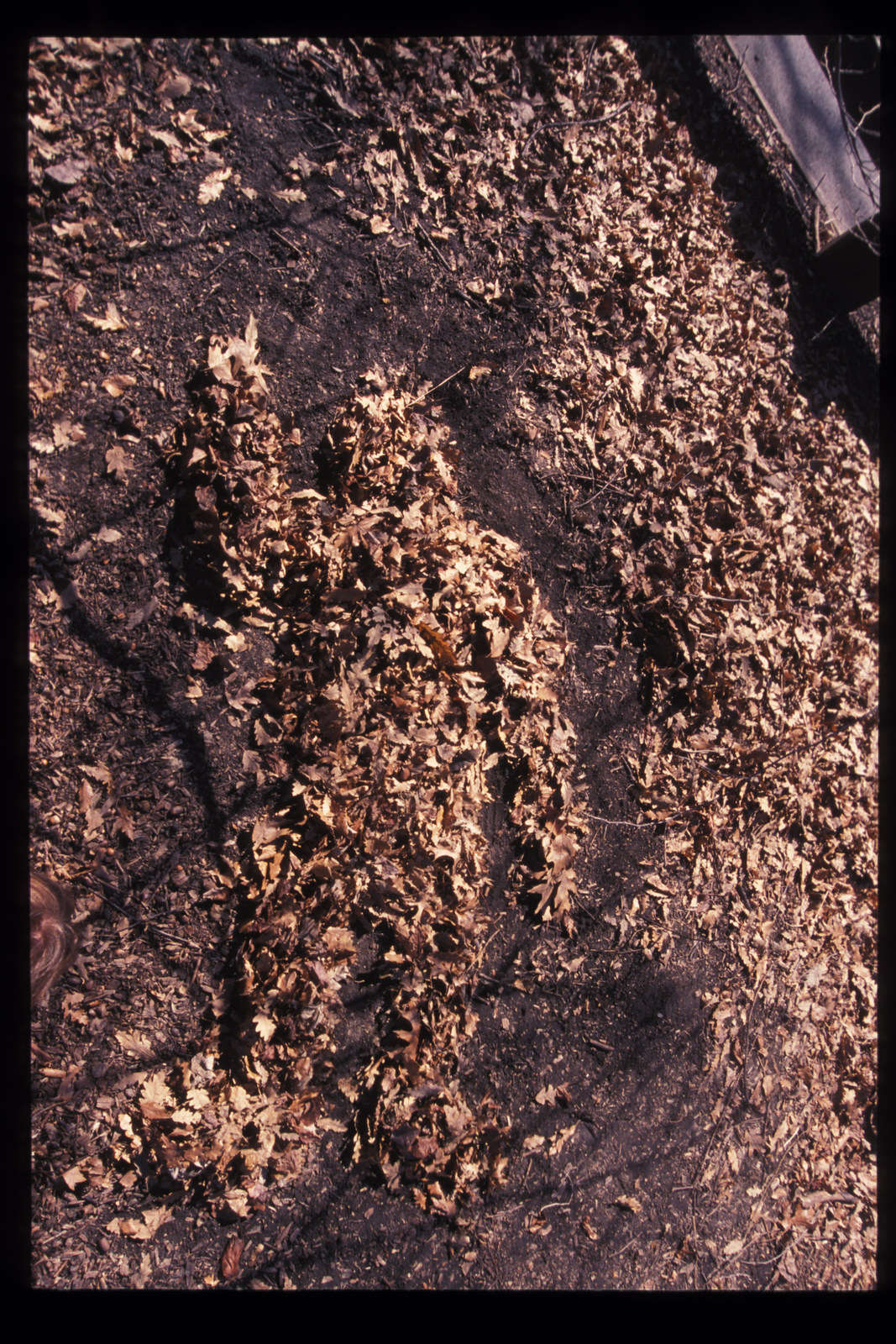
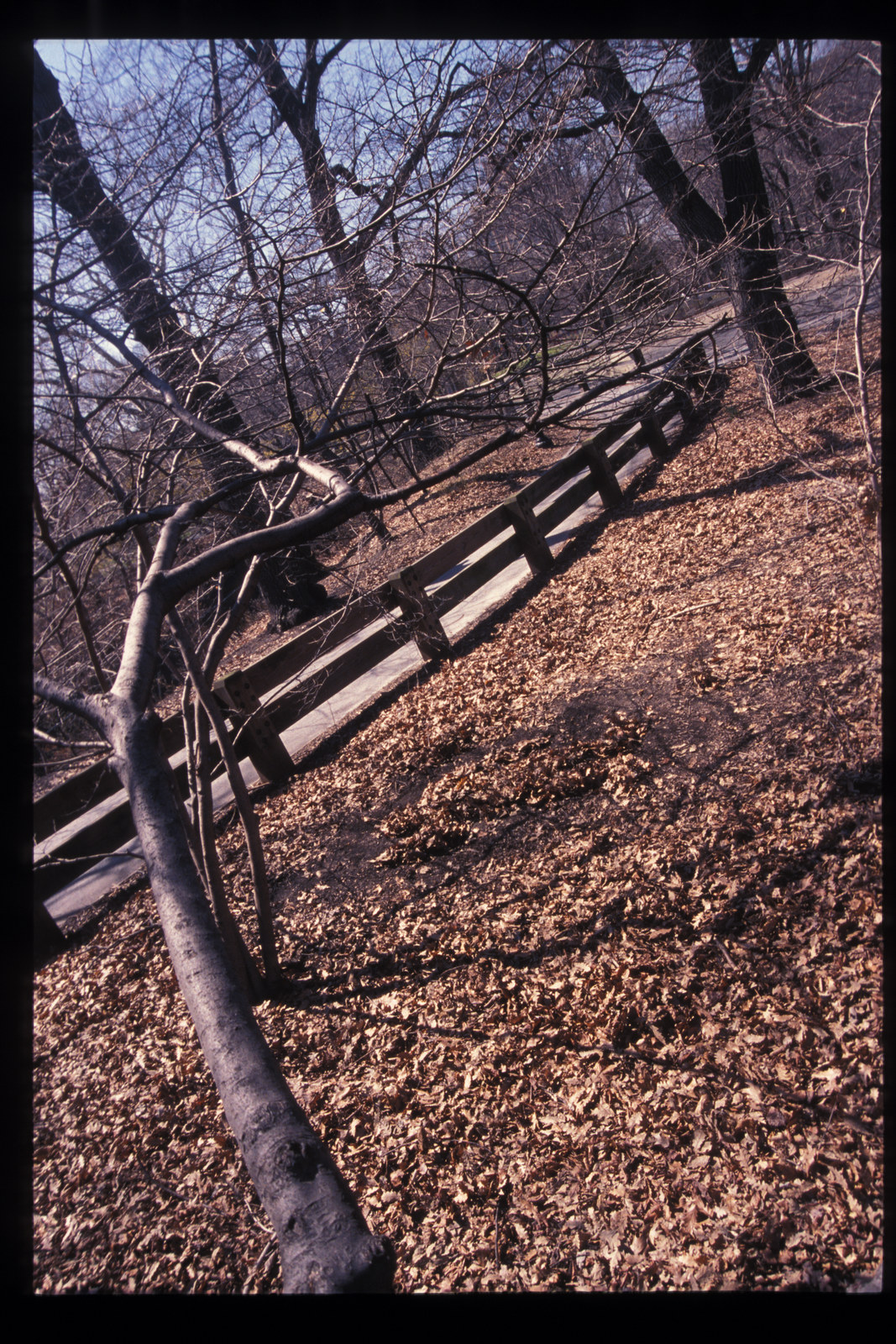
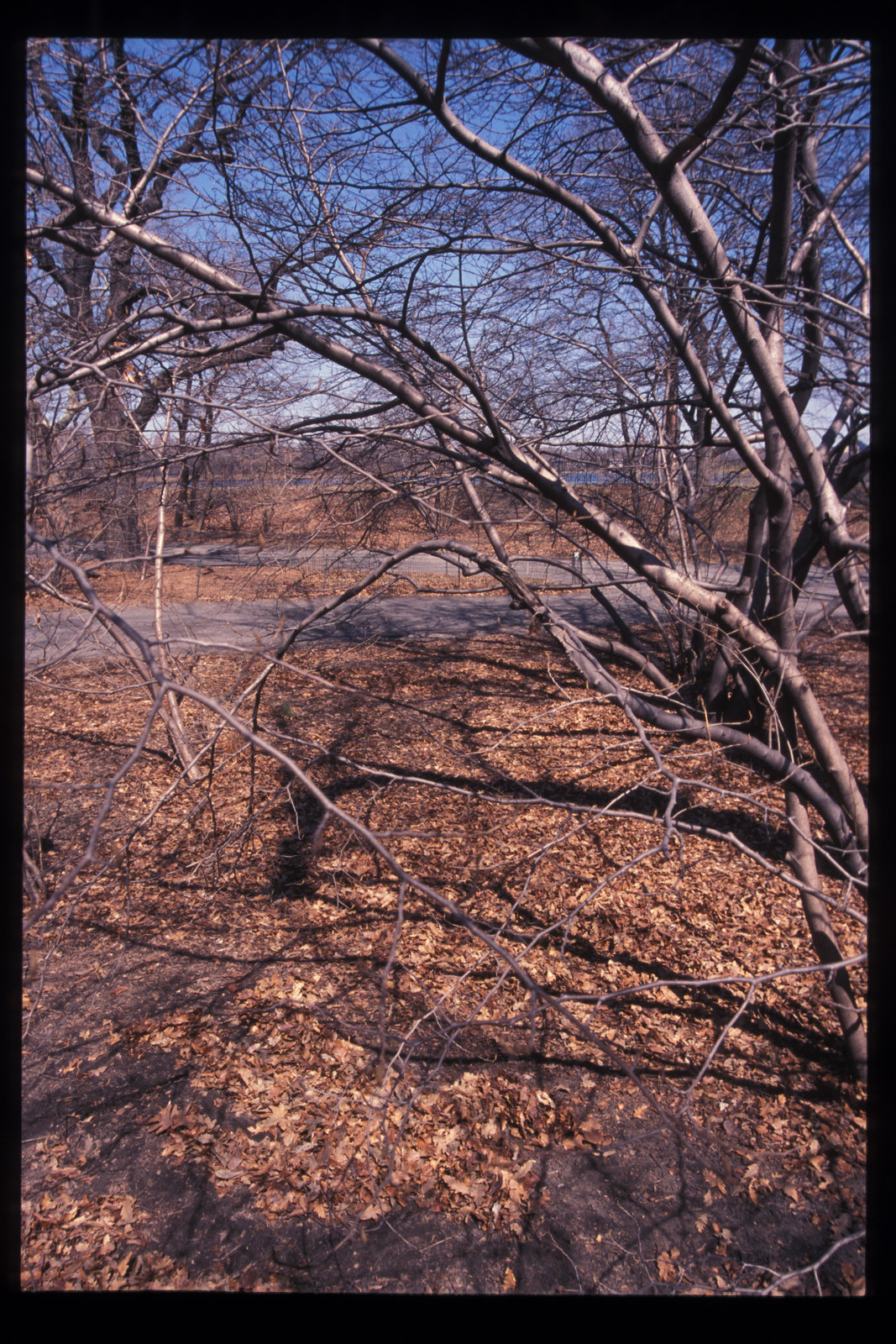
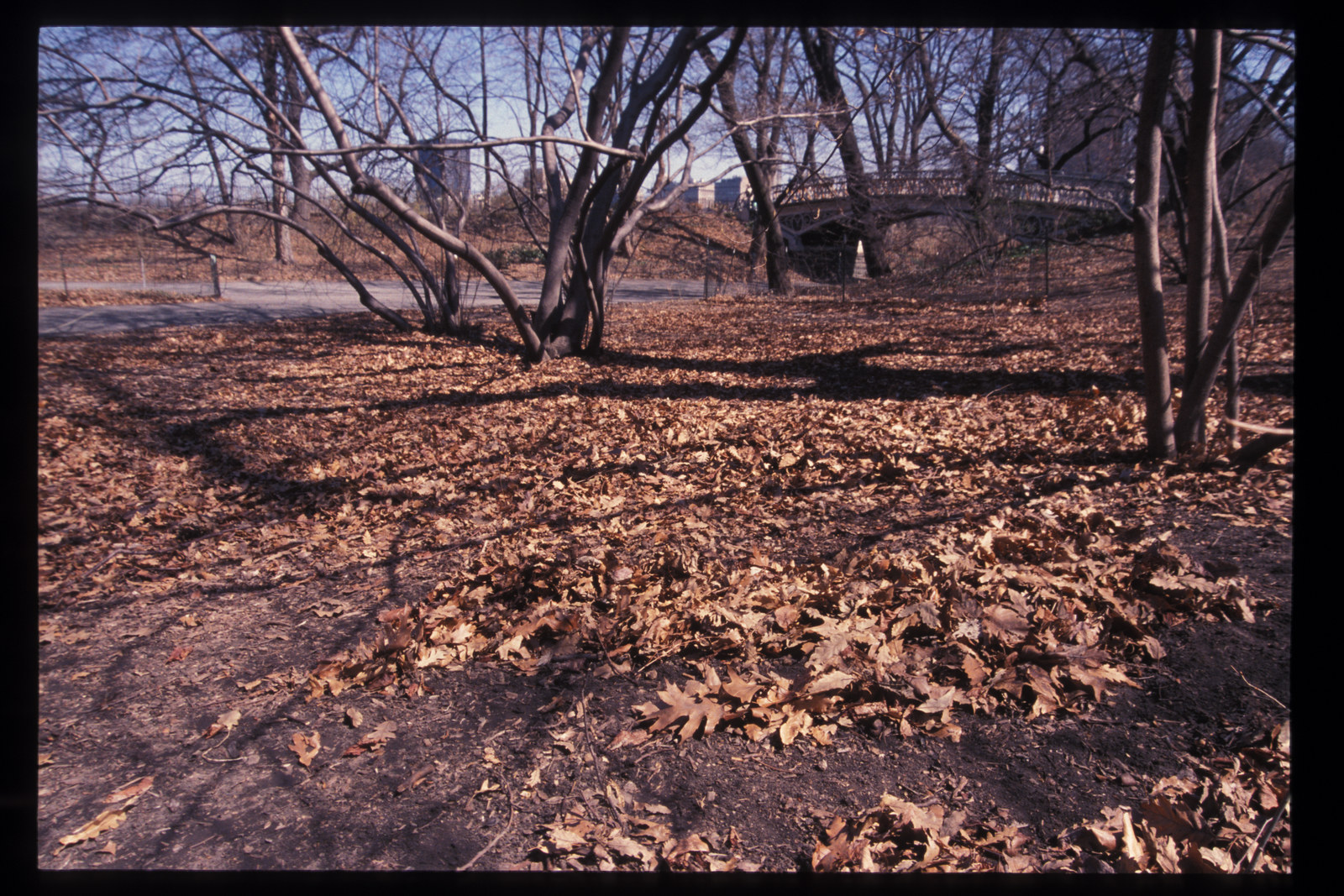
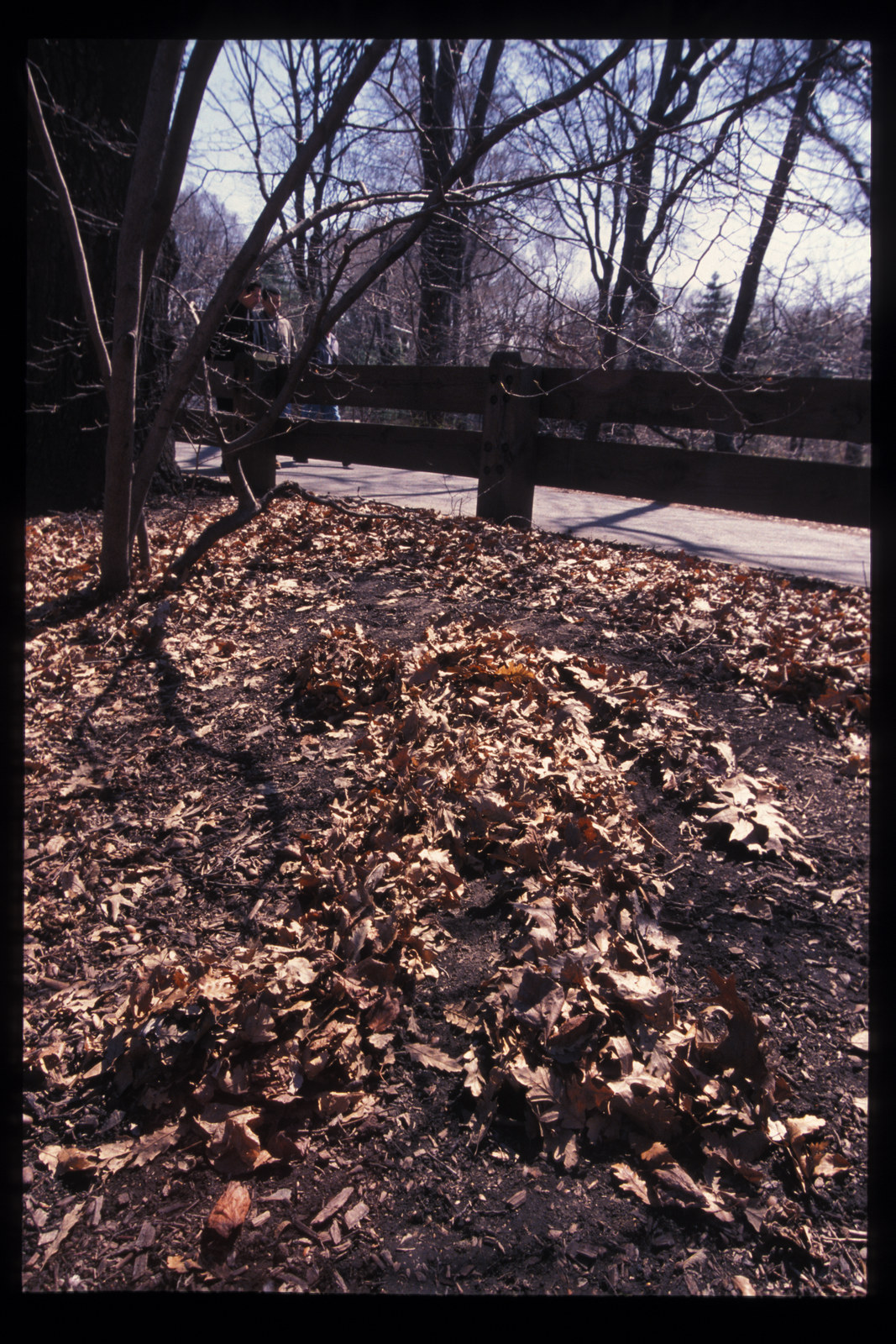
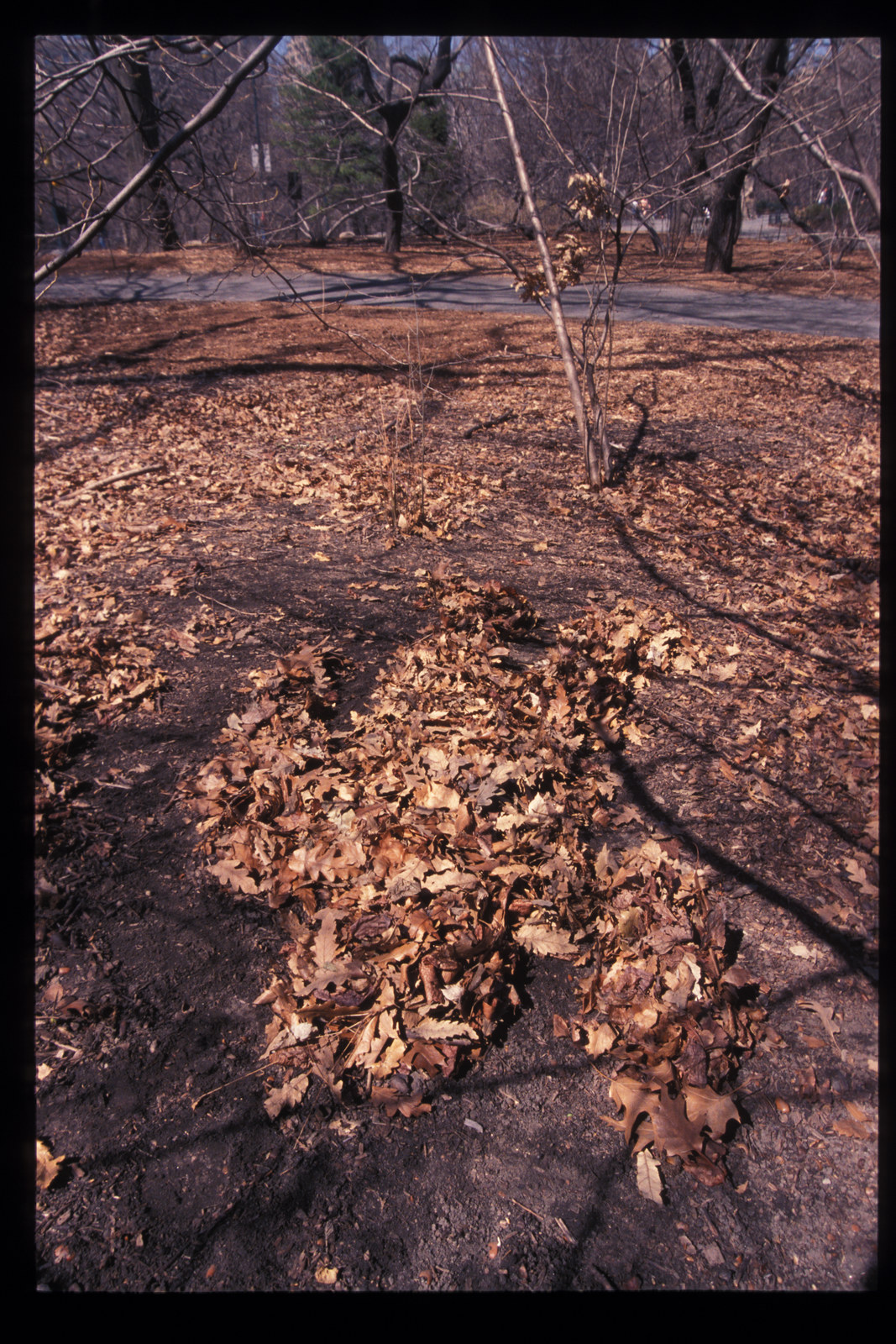
Kenneth KumpelCentral Park between W 86th St and W 87th StHeart Four · Location 352 · Drawn March 2004Download photograph 1Download photograph 2Download photograph 3Download photograph 4Download photograph 5Download photograph 6Video podcast0:00Good luck finding this drawing's location. It's a tricky one.0:03You want to start on West Drive in Central Park where it crosses over 86th Street on the northwest corner of the Great Lawn.0:12There's a lamppost labeled W8503 at this intersection of the drive.0:20There's a walking path with a heavy wooden guardrail on its left.0:24If you enter that walking path and start heading north, you'll be moving counterclockwise.0:29Eventually it will point you heading to the east.0:34You'll pass Lampost 8607 on your right and a large tree on your left.0:40And if you look over this heavy wooden guardrail into the empty patch of land, if you look0:48look over this heavy wooden guardrail into a patch of land with a large amount of rusting,0:54deteriorating brown leaves and in the spring and summer, short leafy green plants.1:00The drawing is made here out of a collection of those browning leaves.1:04This is Kenneth Kumpel.1:06He was drawn in March of 2004.1:10His drawing is counting one person.1:13The area that we're in is not a pedestrian traveled space, so it is years and years and1:20years of built up mulchy brown [unclear].1:23You can imagine like taking all the dry leaves and sort of trying to create a form out of1:32this.1:33These types of dry leaves are essentially formless and the photographs that we took1:39only proved that point unfortunately.1:43It was such an odd shape that we decided that we wanted to um we wanted to try to maybe capture some video of it1:49Dispersing and there was a slight wind at that point in the day1:53we built a wind machine with what we had on hand which was our sweaters and jackets and2:00Wait a wind machine a wind machine. What do you mean a simple wind machine? We flapped jackets at the drawing2:09So you intentionally tried to destroy it after you just completed it?2:14We intentionally destroyed the drawing after we completed it. A lot of the drawings came down2:20immediately after they were done. A lot of the drawings we had done in Central Park stayed up2:27long after we had left or until the elements took them away, but in the case of the drawings done on2:34on buildings, a lot of property owners or security men would ask us to, even residents,2:39would ask us to remove the drawings after they had been completed. So we oftentimes2:44found ourselves destroying the drawings we had just worked hard to do almost immediately2:49after we had documented them. It's not an unusual aspect to the drawings then.2:53One of the main elements that you are capturing sort of universally is the passage of time.3:00and the passage of time is measured by the change in materials of what it is3:07you're looking at so in the case of like a piece of fruit you leave that piece of3:11fruit out through just natural processes it starts to change its actual physical3:16appearance measurement of time you look at a skyscraper you leave that3:20skyscraper alone for 50 years go to Detroit if you want evidence of this and3:24and you will see it start to naturally3:28return to its original base materials.3:31Plants will come in, trees will come in,3:34set their roots and start to break this thing apart.3:37And I know that we have a penchant3:40for trying to keep things fresh and new,3:42and that's a great performance piece when we do it.3:46However, there is an evolution to things3:48that sort of naturally lend them3:51towards changing their appearance over time.3:55Look at ourselves in photographs,3:5650 years from now we're going to see evidence of it also.4:01Within the tapir drawings, they live a very interesting,4:06truncated lifespan where their freshness is important.4:12And in the majority of the murals that we make, murals,4:15as in large pieces ranging from 20 feet to 10 feet4:18to six stories high by 40 feet to 250 feet long to 16 feet high permanent state of done because4:26we remove them when we're done you never actually see their decay in those pieces we actually make4:33the work and take them down immediately and that brings us to what we were doing in New York City4:36was leaving the figures and letting the city remove them by either directly asking us or by4:46by having the forces sort of have them dissolve over time.4:50He was a self-taught handyman and craftsman around the house, an endlessly patient, delighted4:56father of Gregory XI and Carl IX, a buddy who sought through work the camaraderie of5:04other guys, first as a New York City police officer and then more happily as a firefighter.← Location 351Heart Four · Location 352Location 353 →