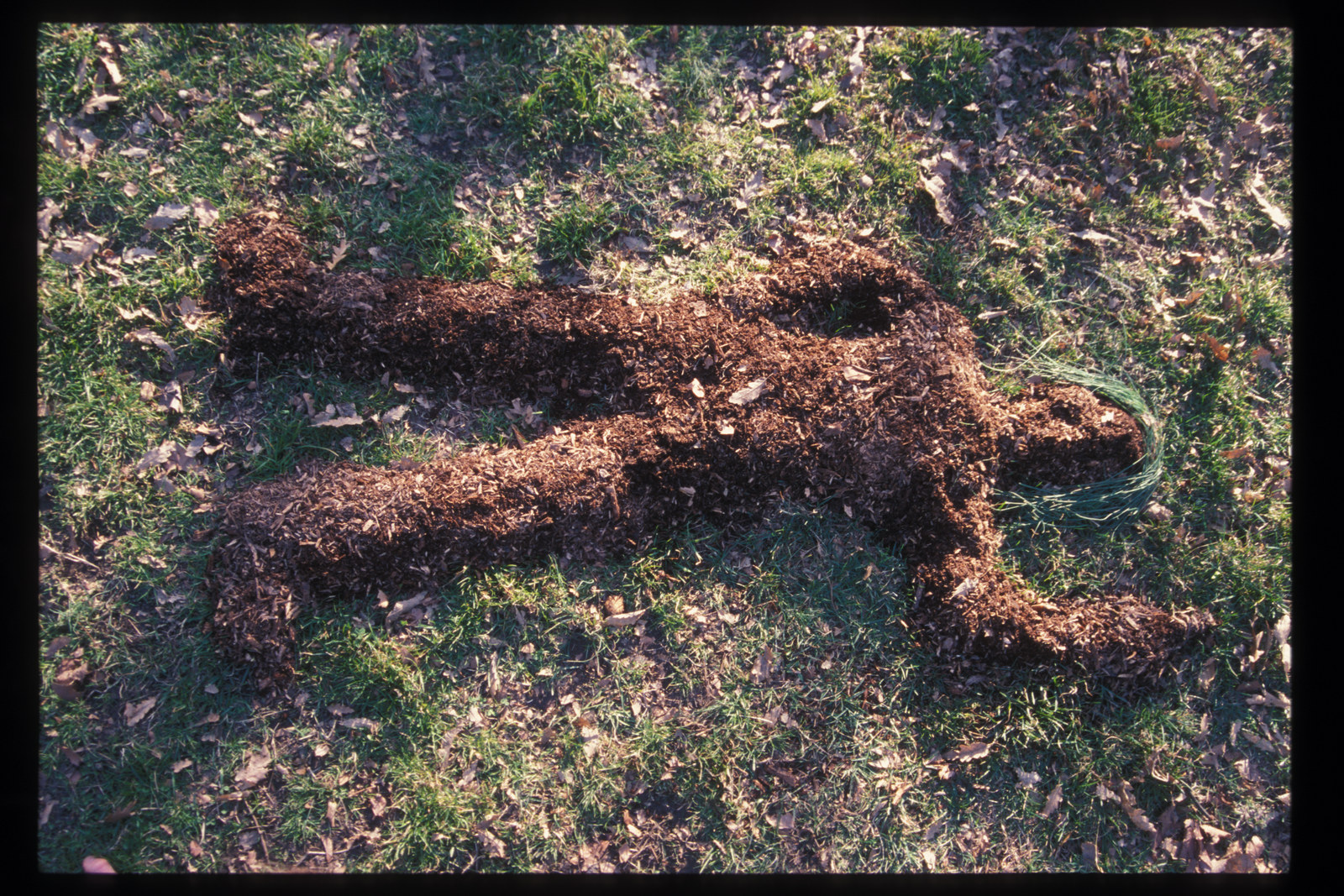
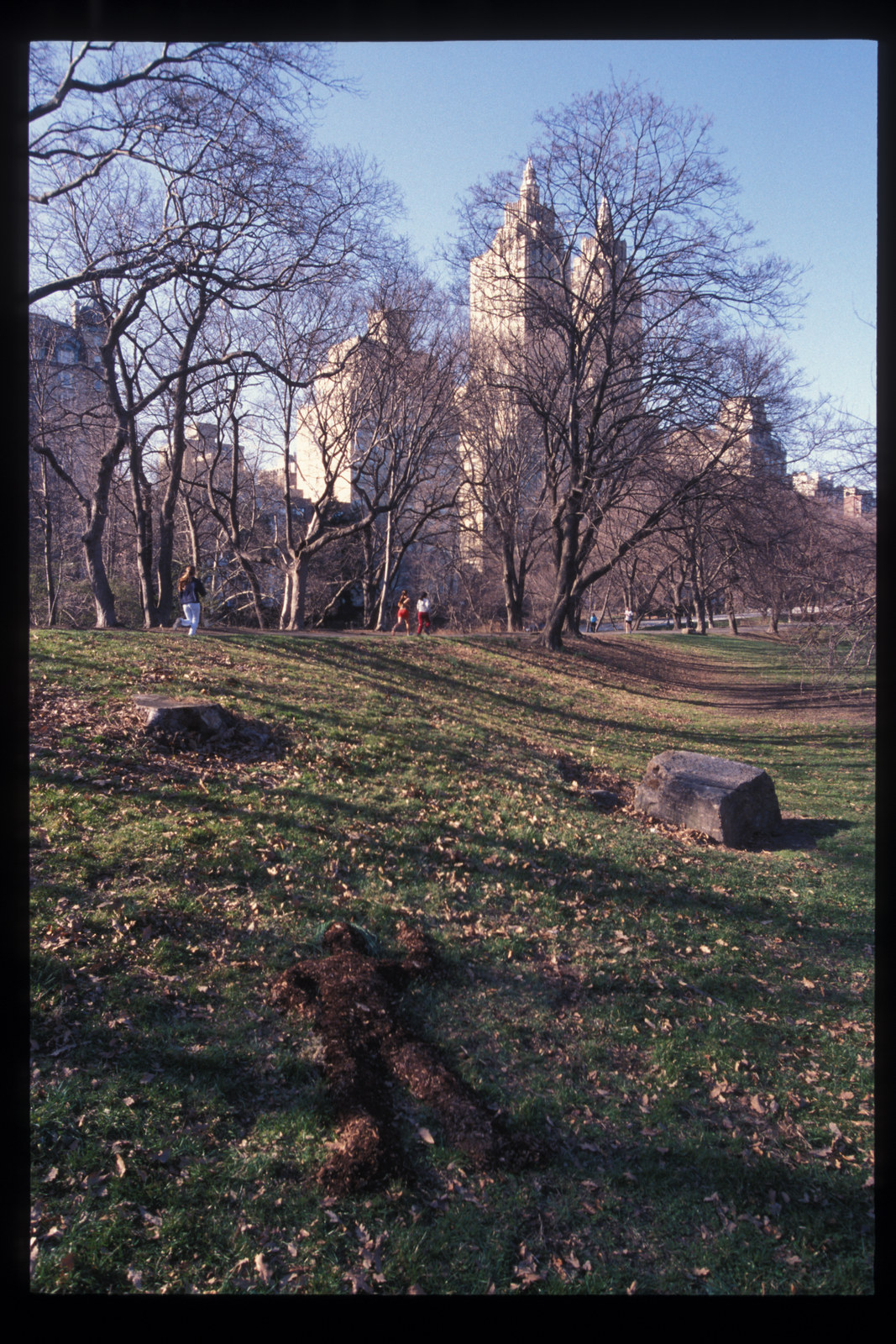
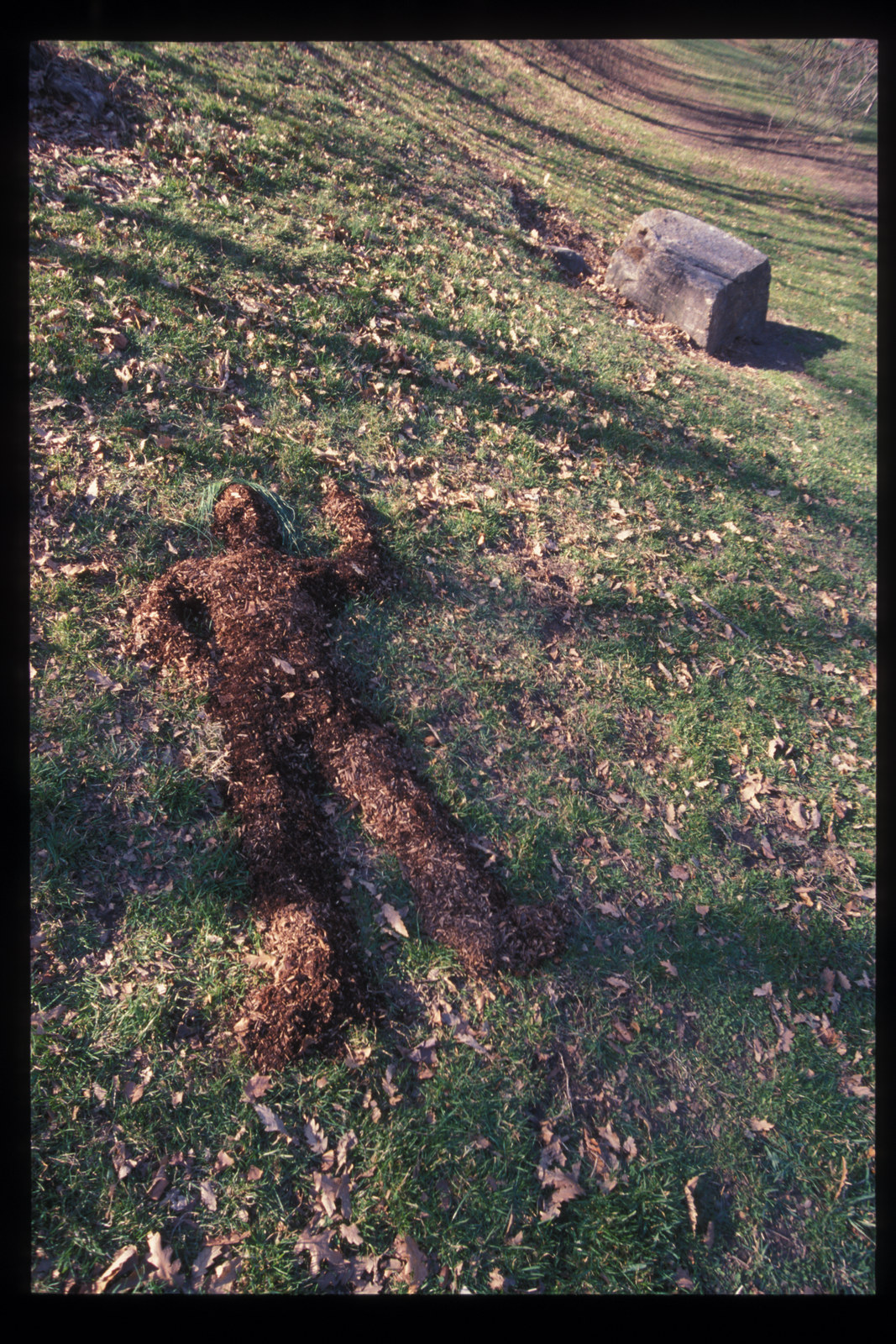
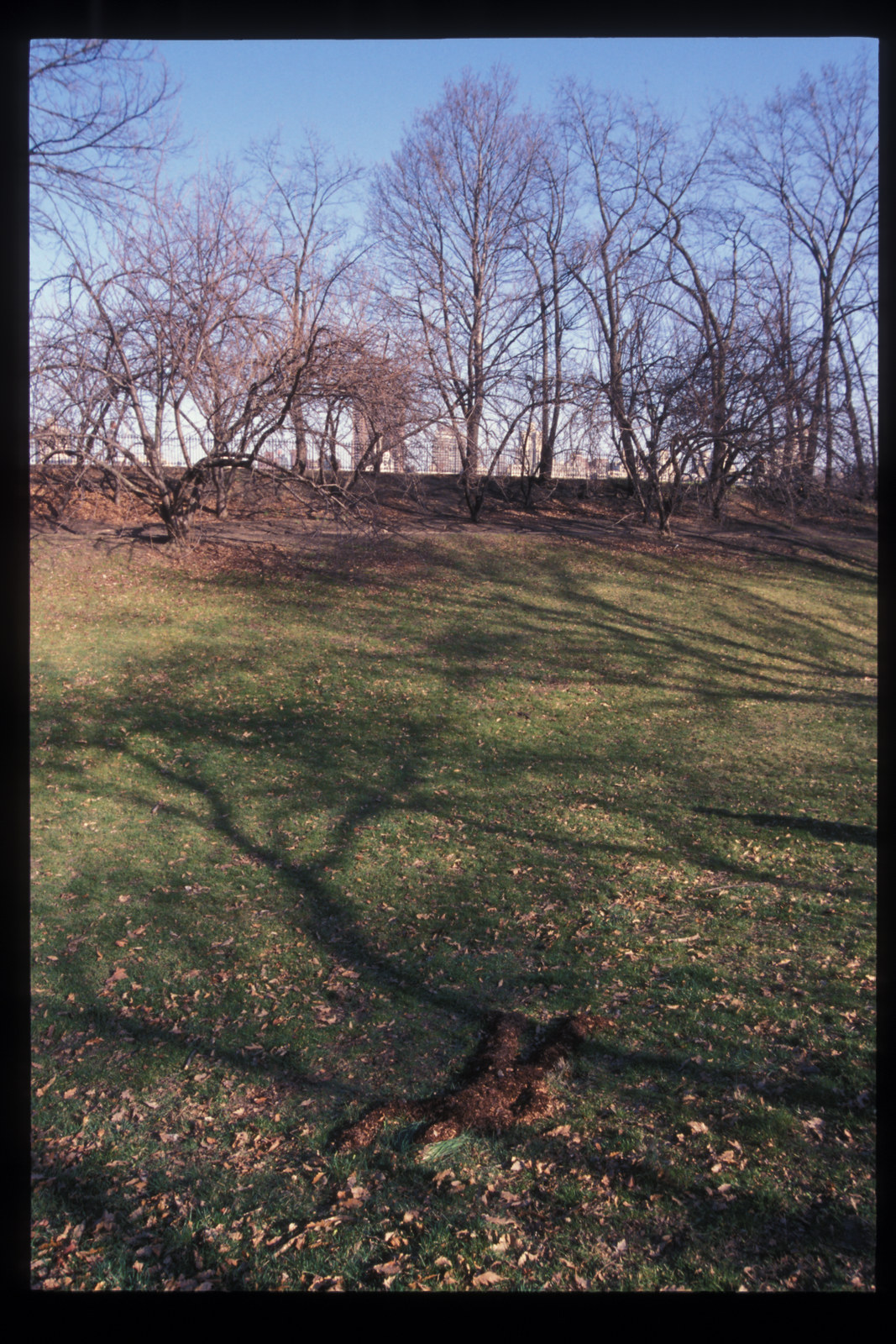
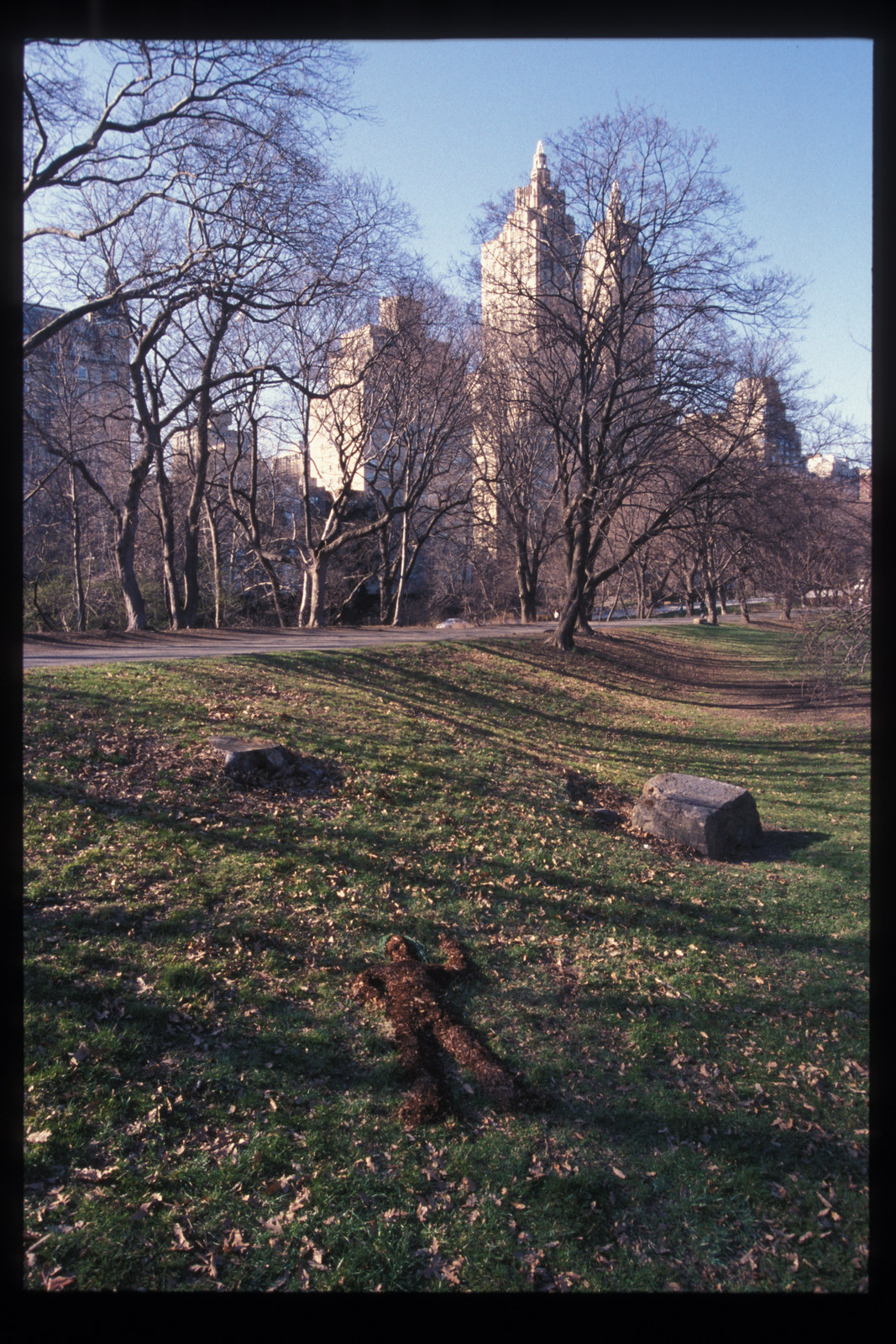
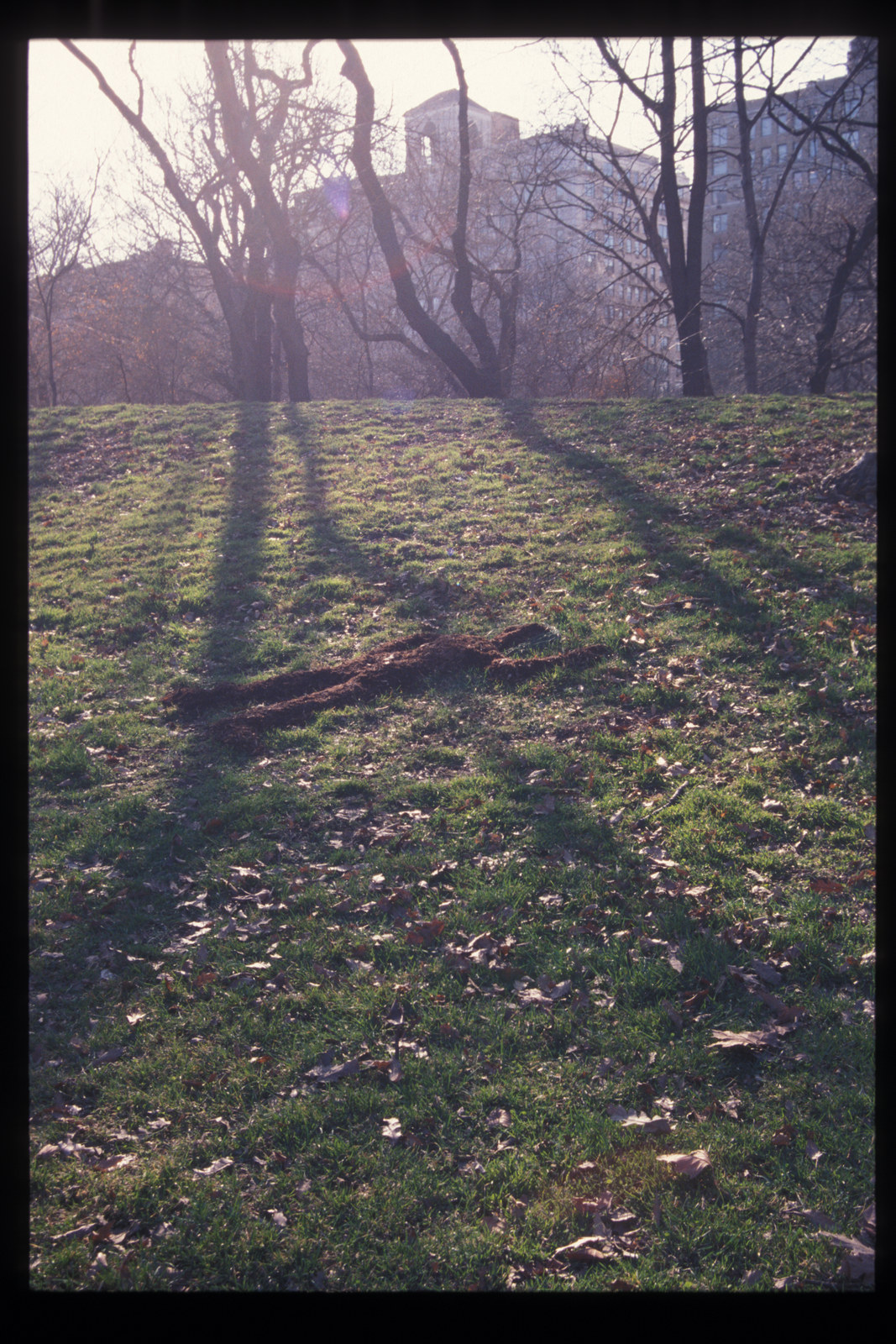
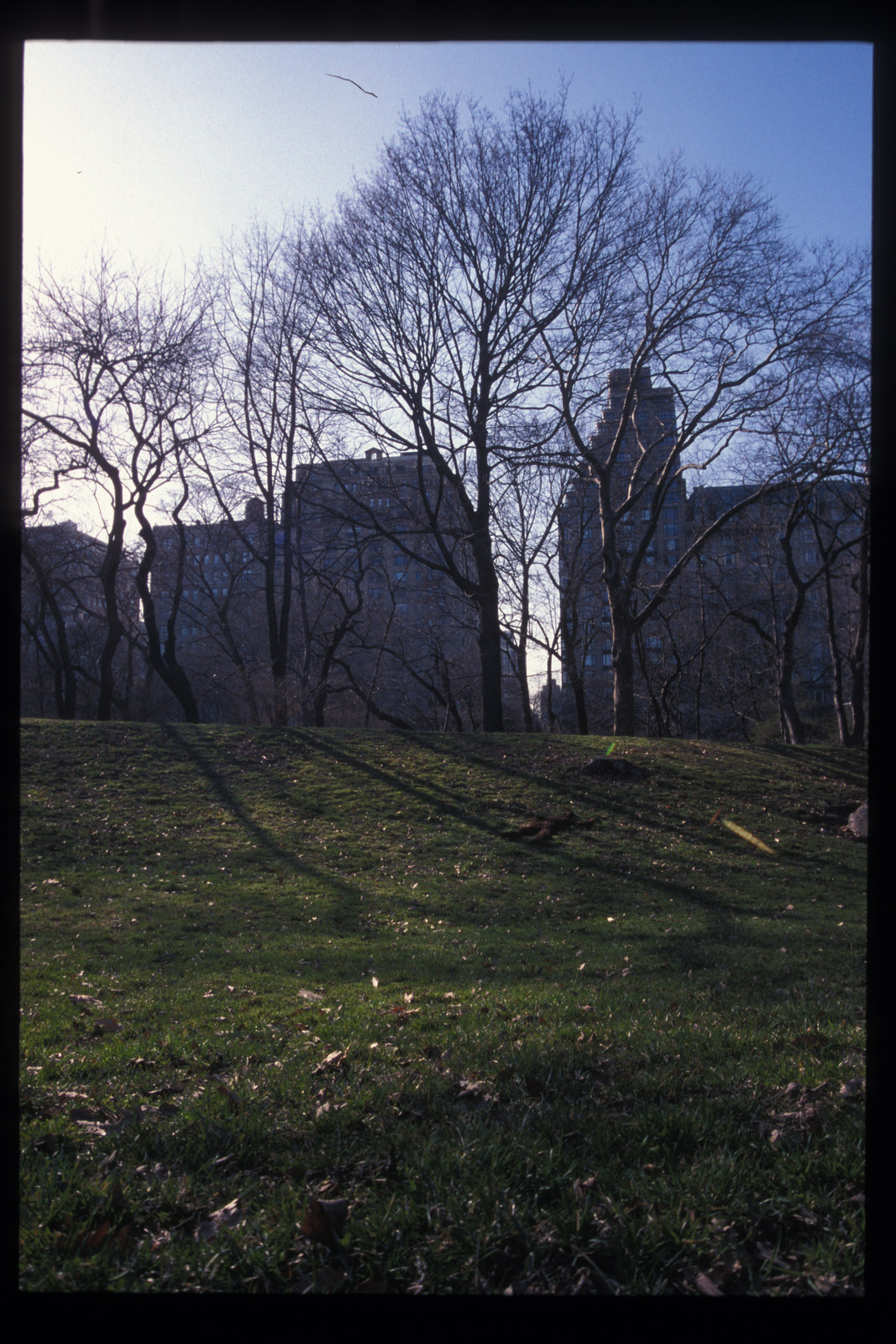
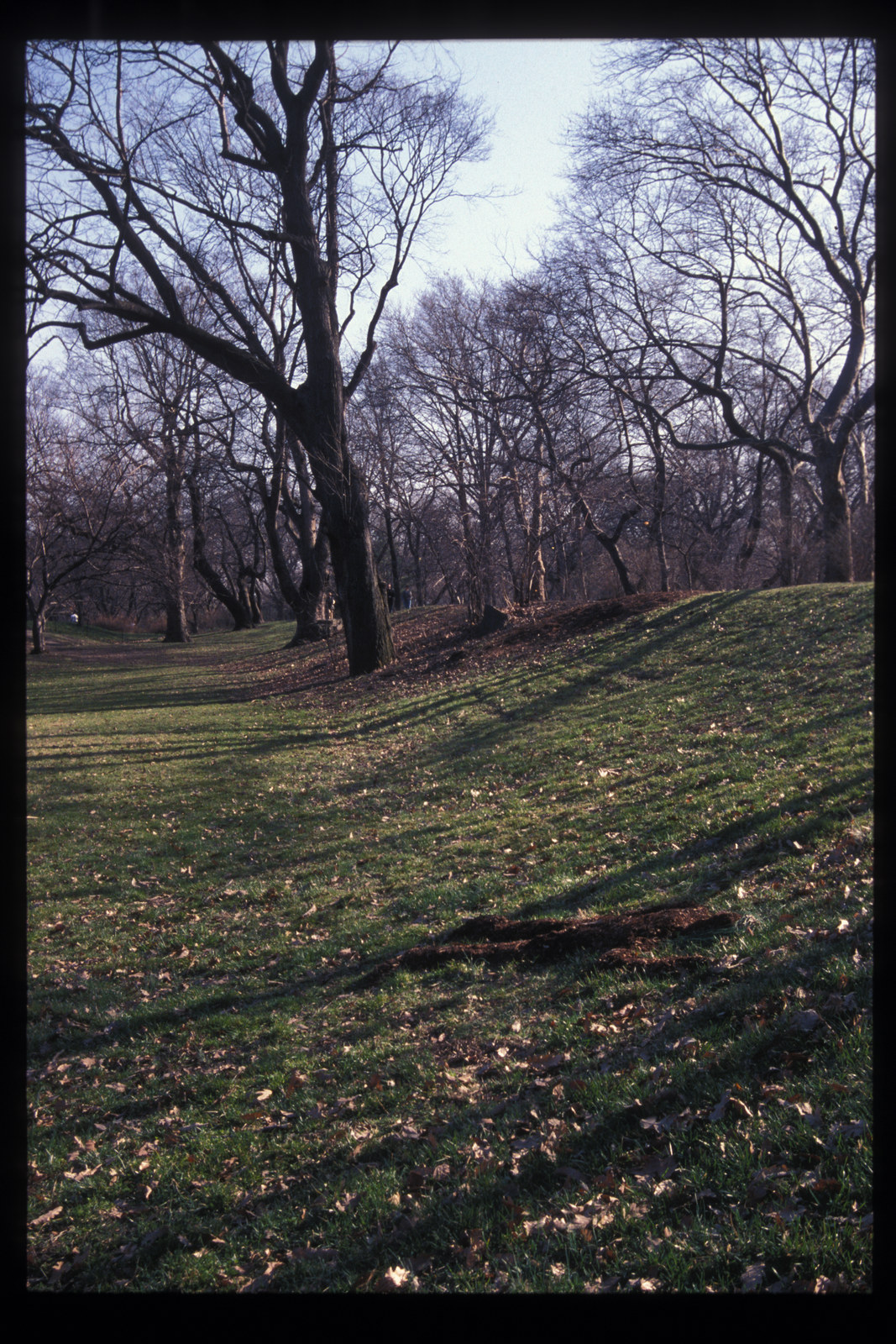
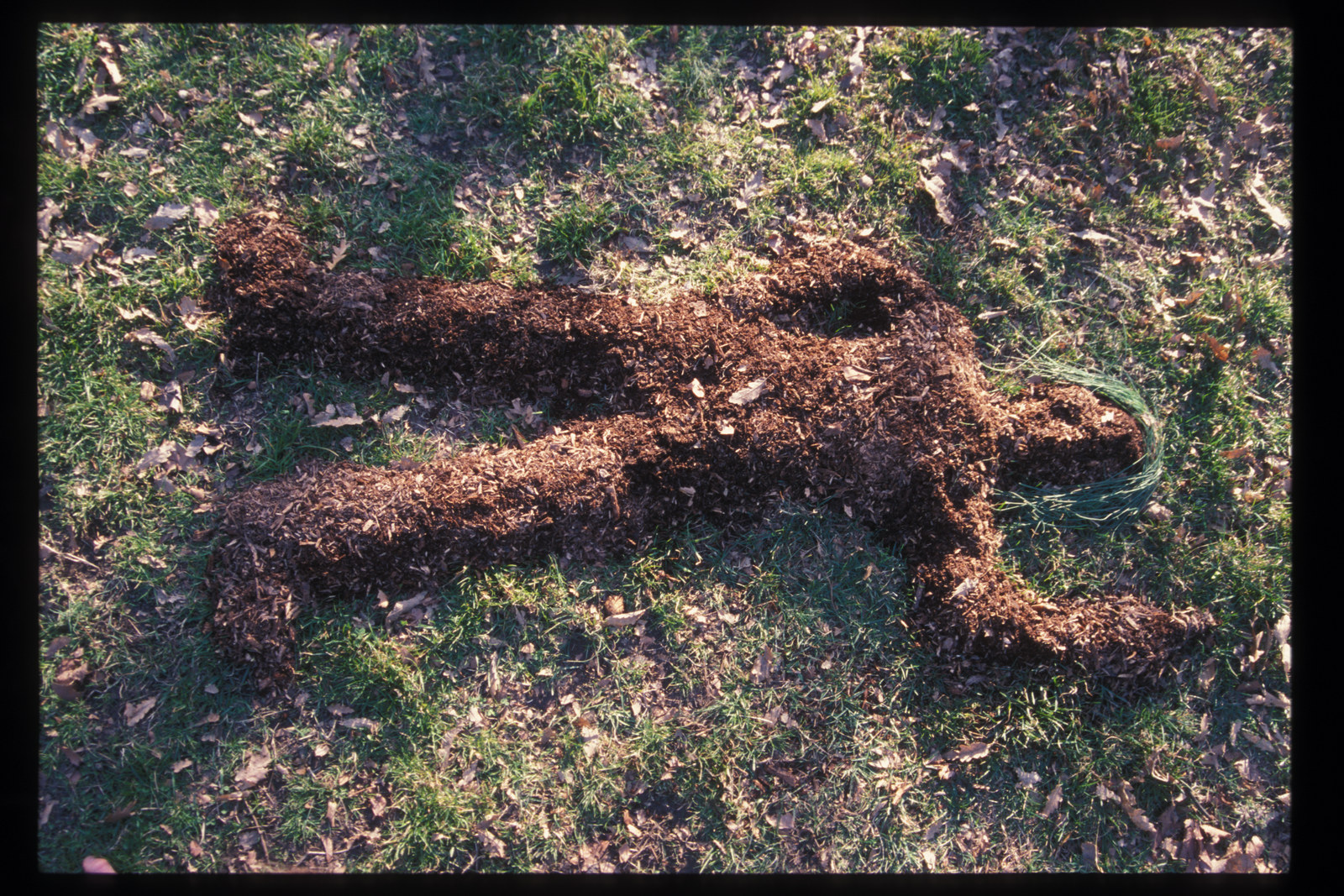
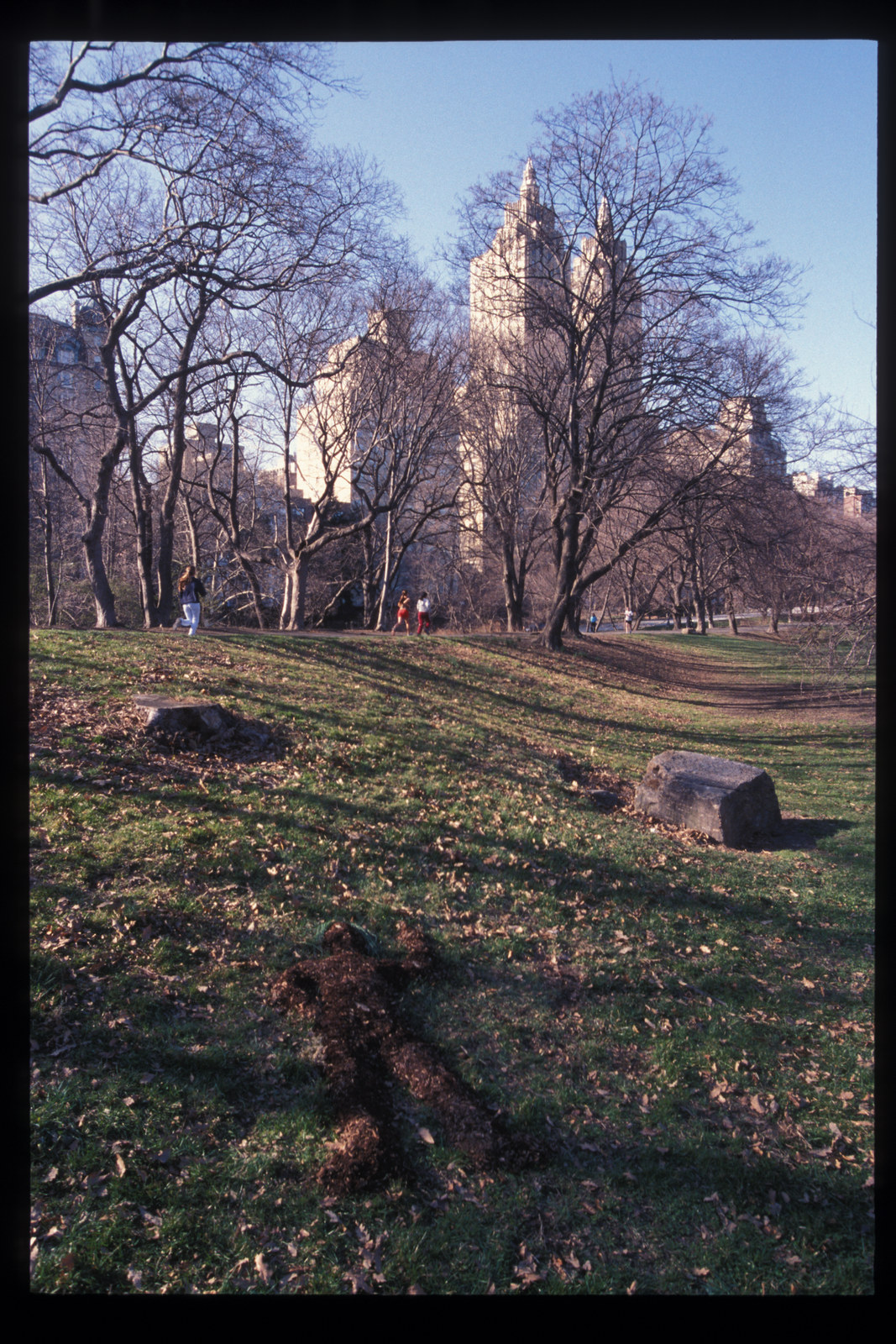
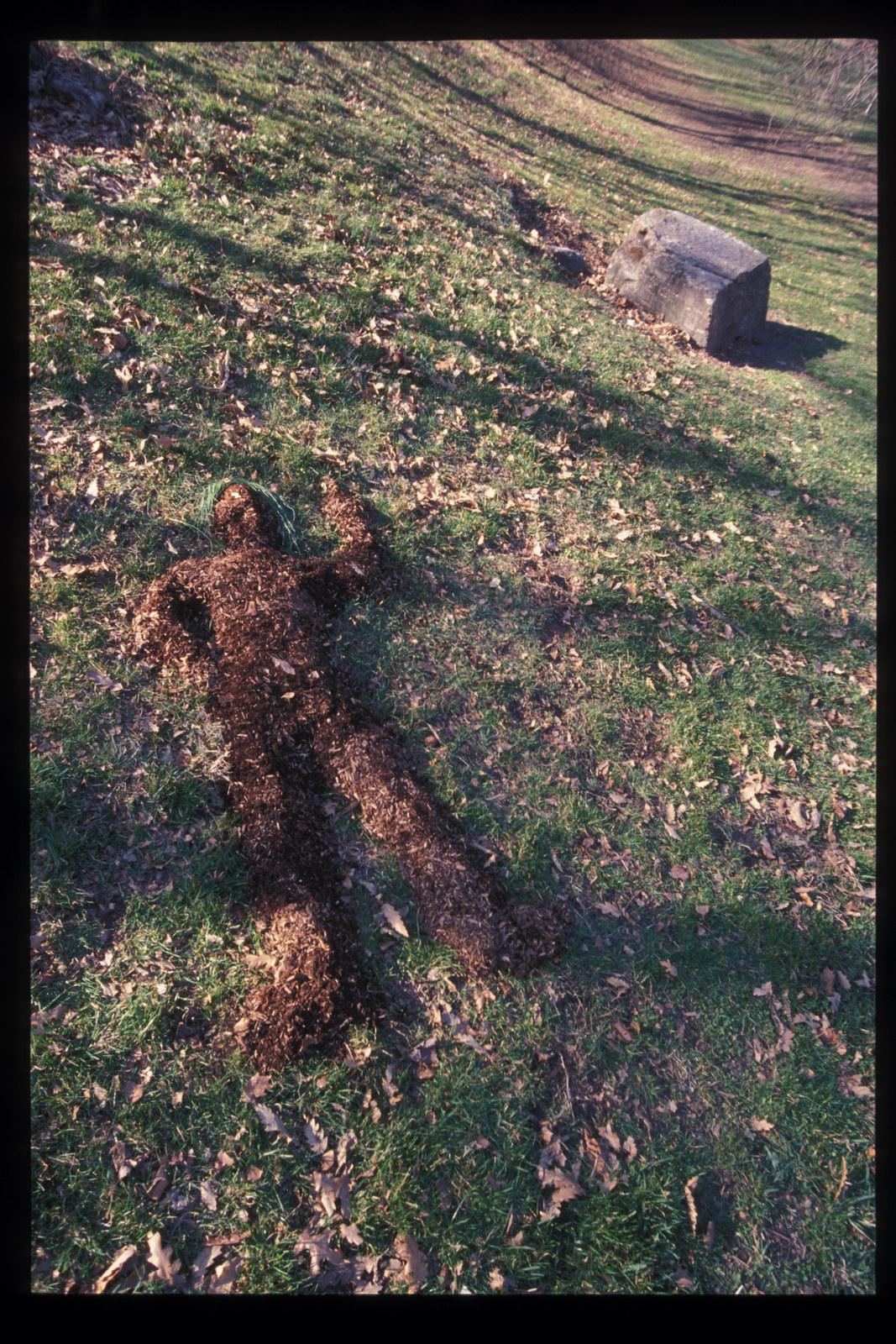
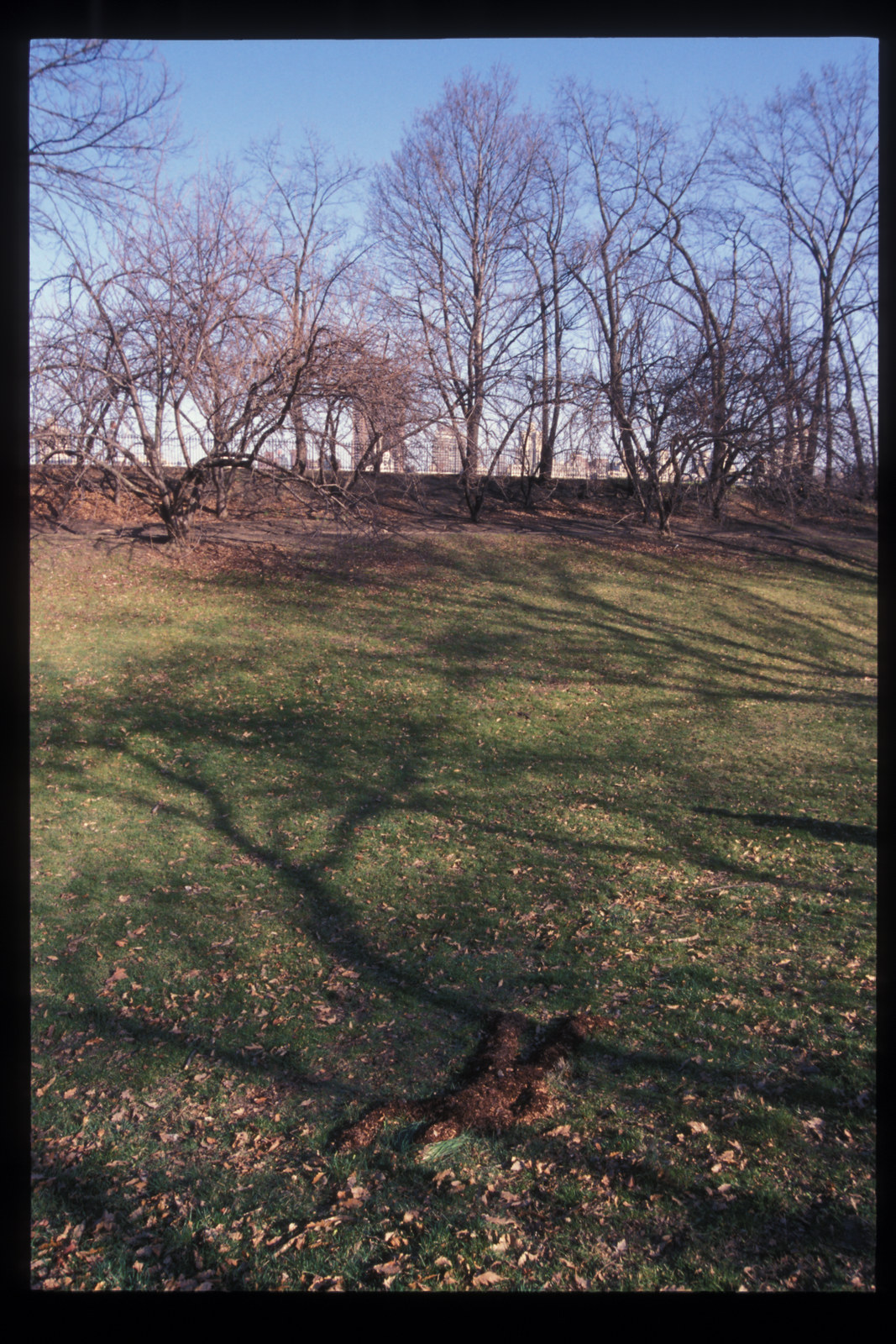
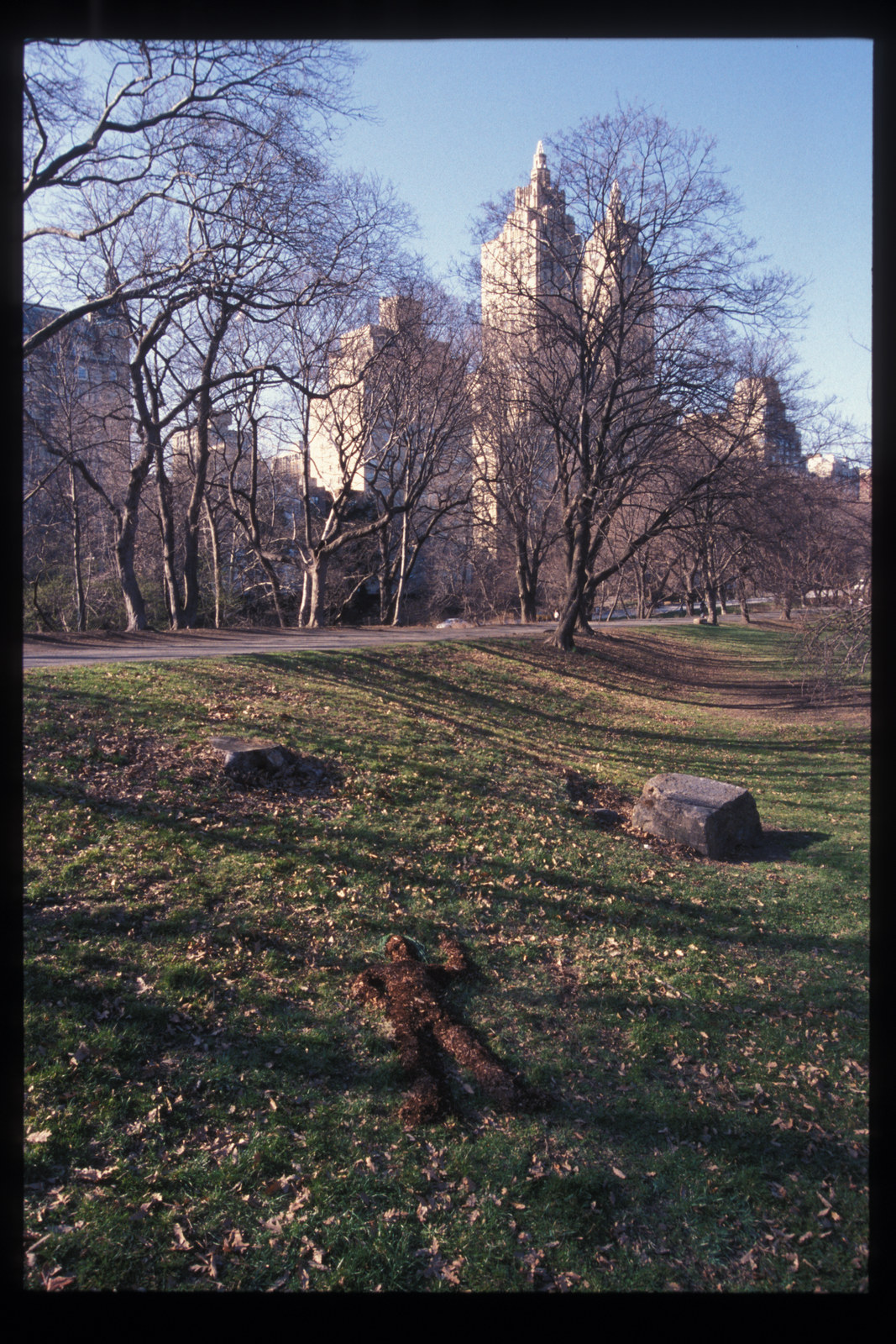
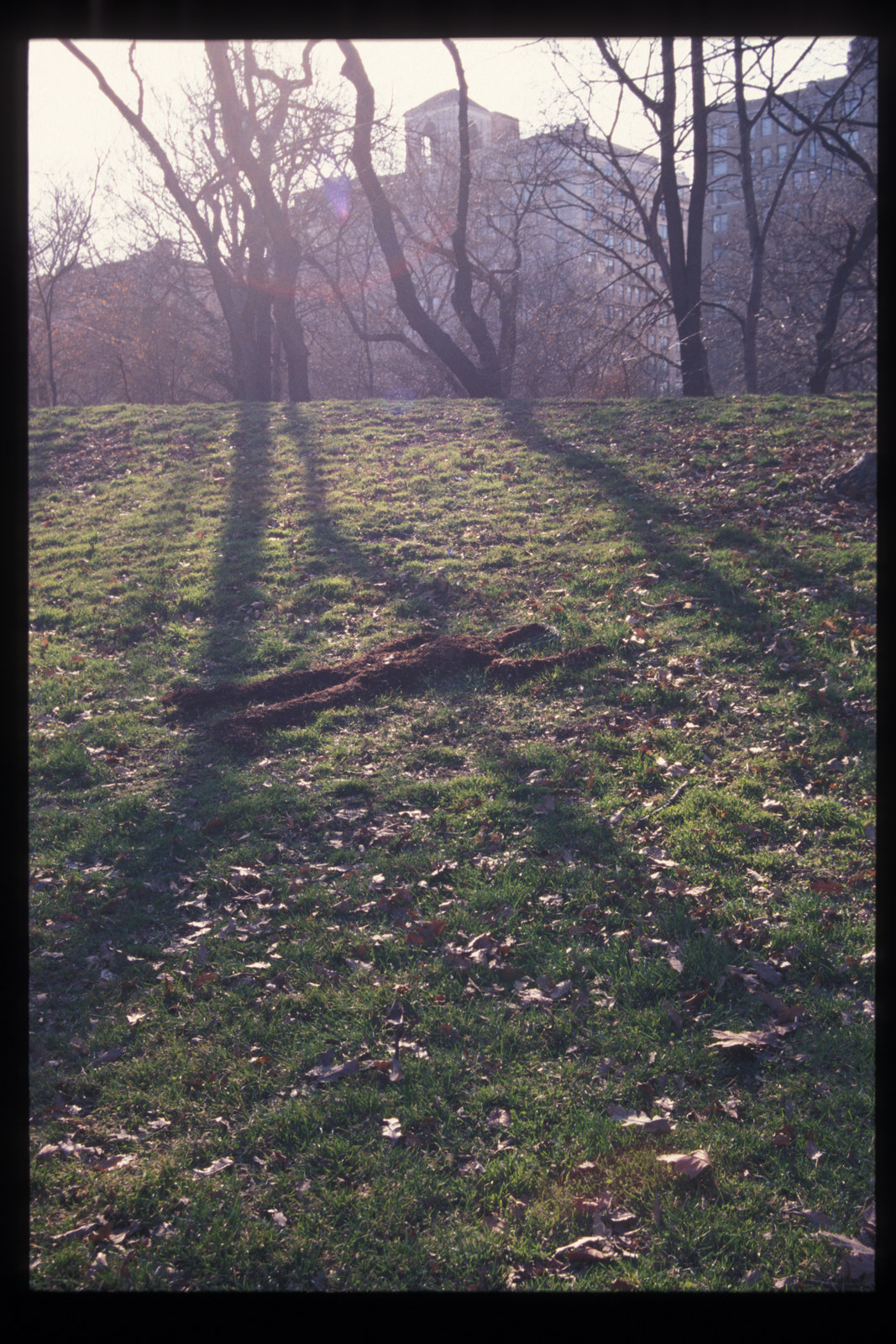
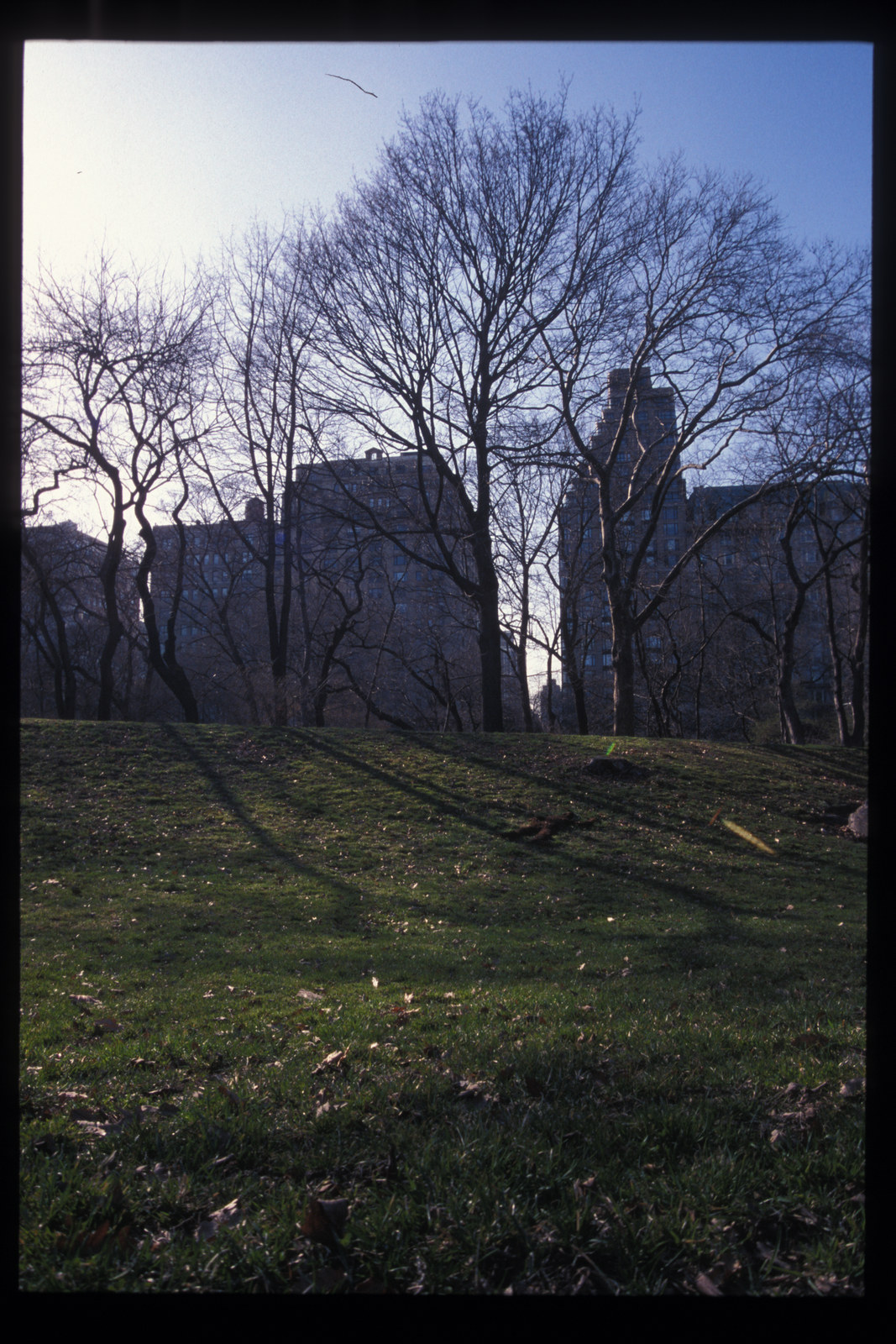
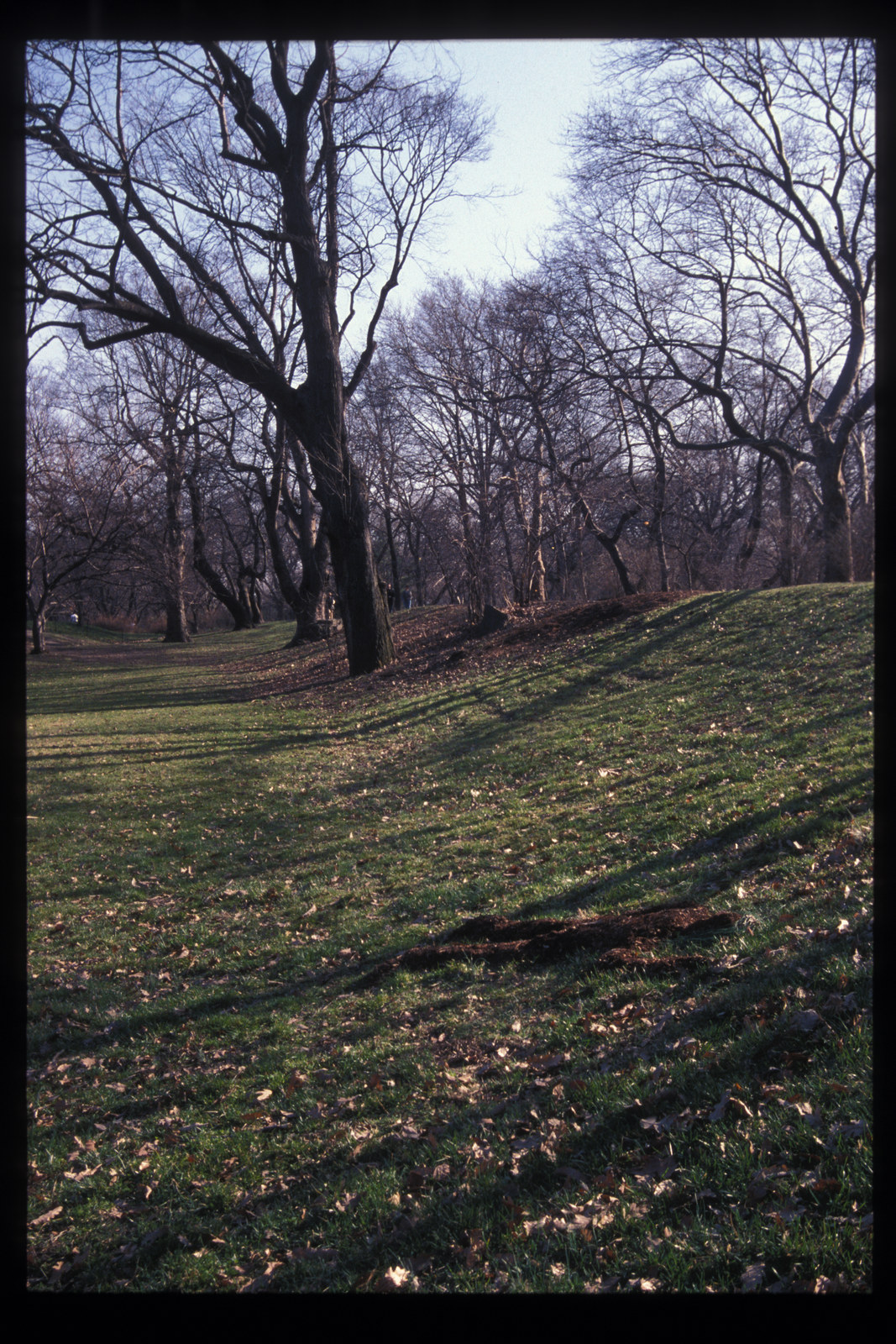
Dianne Bullis SnyderCentral Park between W 88th St and W 87th StHeart Four · Location 355 · Drawn March 2004Download photograph 1Download photograph 2Download photograph 3Download photograph 4Download photograph 5Download photograph 6Download photograph 7Download photograph 8Video podcast0:00Central Park hosted this drawing. To find it, you would get to the bridle path, that is, west of the reservoir, starting from the southwest corner, leading away from your last water fountain, and traveling north on the bridle path between the reservoir and West Drive.0:19On your right hand side, you'll see a shallow valley of grass filled with trees.0:24In this shallow valley, about 20 feet off the path, you'll find a large angular stone0:29about the size of a cushy sitting chair, standing by itself, surrounded by the manicured lawn0:34around it.0:35South of this rock, about 15 feet, we made this drawing using the multi-material from0:42a recently removed tree.0:44This is Dianne Bullis Snyder.0:46She was drawn in March of 2004.0:50Her drawing is counting one person.0:54We brought up a couple really interesting threads that could get followed through a little bit more,0:59like understanding the whole project and why it is that you've been attracted to these traumatic situations1:05and what art is supposed to do in those situations.1:08I think maybe an approach that we can use is we can talk about our work in the hospitals.1:16is a connecting thread of intention as well as very literally just getting out1:26in there and doing it that connects Oklahoma City to the present day.1:30The first hospital we ever worked on was in the Children's Hospital in Oklahoma City.1:36In 1995. In 1995 and the discovery quite simply was that using tape as a tool for1:44drawing, we're able to be an extension of a patient's imagination, especially somebody1:48who doesn't necessarily have a condition or circumstance that allows them the freedom1:54just to participate in anything to start with.1:58And on top of that, you're in environments that just by necessity, but also by a set2:04set of aesthetic rules are as clean and sterile as they need to be in order to theoretically2:16assist in the health of the patient. So where tape art comes in as a process and cuts right2:23through that is because of its ability to be applied to walls without hurting those walls2:28and our mannerism within those environments of listening to a patient2:32and trying to tune into something that will transform their space into their space.2:38And that's sort of where we get into a vocabulary of us being vehicles or vessels2:44for other people's wants and wishes and ideas.2:48But, I mean, you're making drawings based on conversations you're having with the kids2:53and what they want to see, or how do you decide what you're drawing?2:55We make drawings based on conversations with whoever's around at the time.2:59So in patients' rooms, we'll talk to the family members,3:02who are generally more present than the patients themselves, sadly enough.3:06Although when the patients are around or have a voice, we love to interact with them directly,3:12and oftentimes those interactions are the richest.3:14And they'll let us know exactly what they want us to draw.3:17So one striking example is of a young man who's probably about 163:21that had been involved in some accident of some sort.3:25He wanted to represent himself and his girlfriend.3:28It was right around Valentine's Day.3:30And he wanted to be giving his girlfriend a gift in a mural on his wall3:36and to do for him what he was unable to do in physicality.3:41And so Mike and I were able to make that happen for him3:45and also for his girlfriend who would be coming to visit him.3:48We think that we've answered a need,3:52and that need continues to march on with the sort of the fights over the3:58memorials and the presentation of smaller memorials and websites and there4:03is obviously a large hole that is being filled in and we have been marching4:08through that for five years steadily doing something that we believe is4:14healthy for us but also it's an extension of a collective need from the4:19the city and it's bold to say but because of the internet we can say very literally the world so4:26how would you articulate the need that you believe is being filled through this project the need is4:30really beautifully articulated by the url the web address for the official memorial project it is4:38simply buildthememorial.org that simple phrase really gets at the key emotion there which is4:46like just build it, you know, we need something, some structure, some place, some environment4:54or context in which we can come together and recognize that we all felt something massive4:59on that day.5:00The buildthememorial.org is a full page ad that we saw on USA Today and it coincided5:06with one or two articles about the upcoming fifth anniversary of the World Trade Center5:12and there's this continuing looming sense of bureaucracy and hypocrisy and5:22frustration and compromised vision compromised visions and we are not only5:29looking at the necessity but the necessity is being dragged through5:33systems that don't allow it to become a reality long past people's initial5:41[unclear], critically important needs.5:44We're hoping by this fifth anniversary that we will be able to fulfill in a very real5:50way a need.5:51Every person we've talked to over the last five years in our dark moments when we have5:56sort of slipped and started to fade away from the project and maybe even given up a little6:01bit of hope, we will talk to some stranger, a gas station attendant, a person at a ski6:08ski shop, nurse at the hospital, and you'll tell them about the project and it becomes6:15glaringly obvious again that we need to get ourselves back on track and finish this thing6:21off.6:23Diane was a loving mother and the best chocolate chip cookie maker.6:27She was an avid tennis player, a Dartmouth Indoor Tennis Club member, and a past club← Location 354Heart Four · Location 355Location 356 →