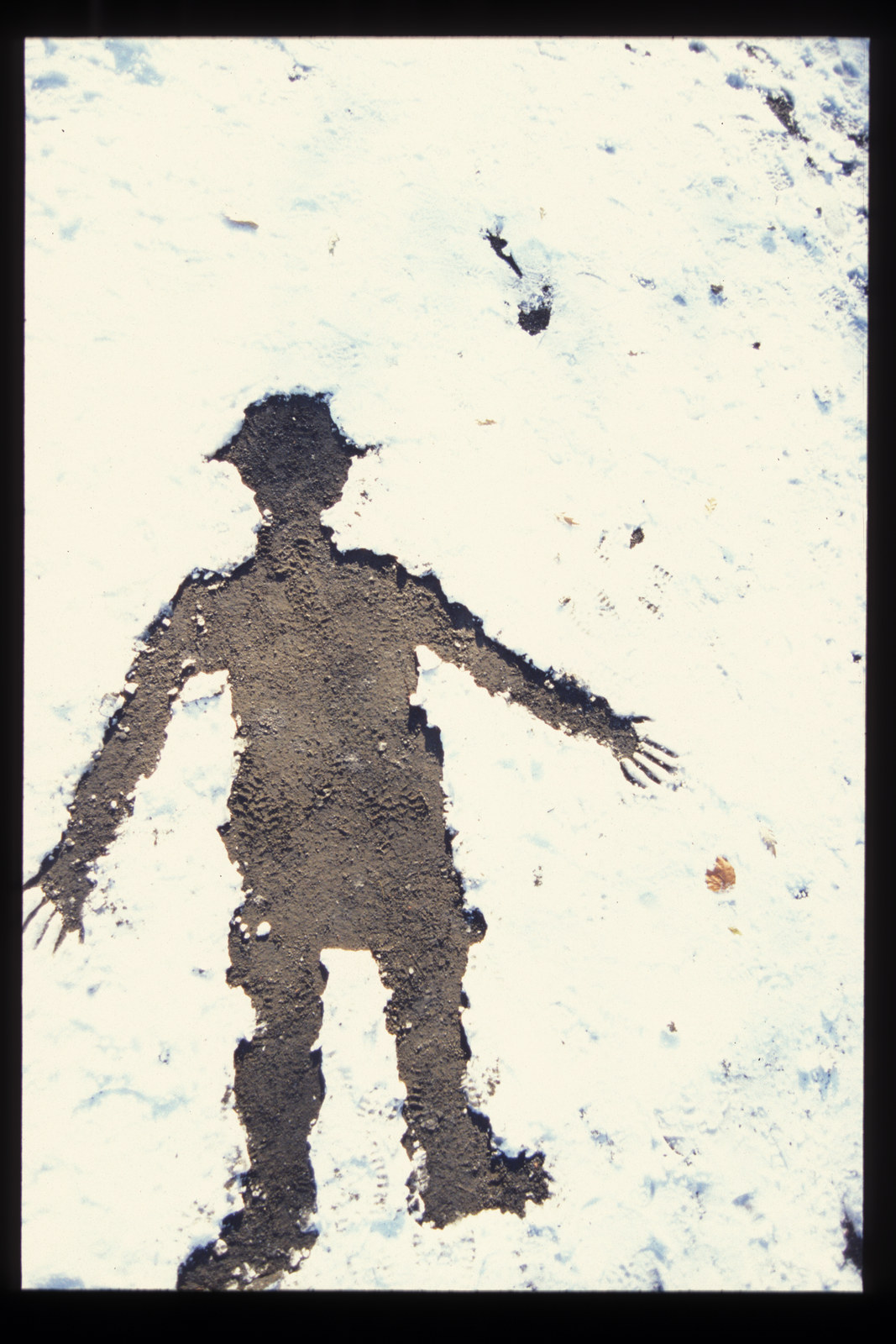
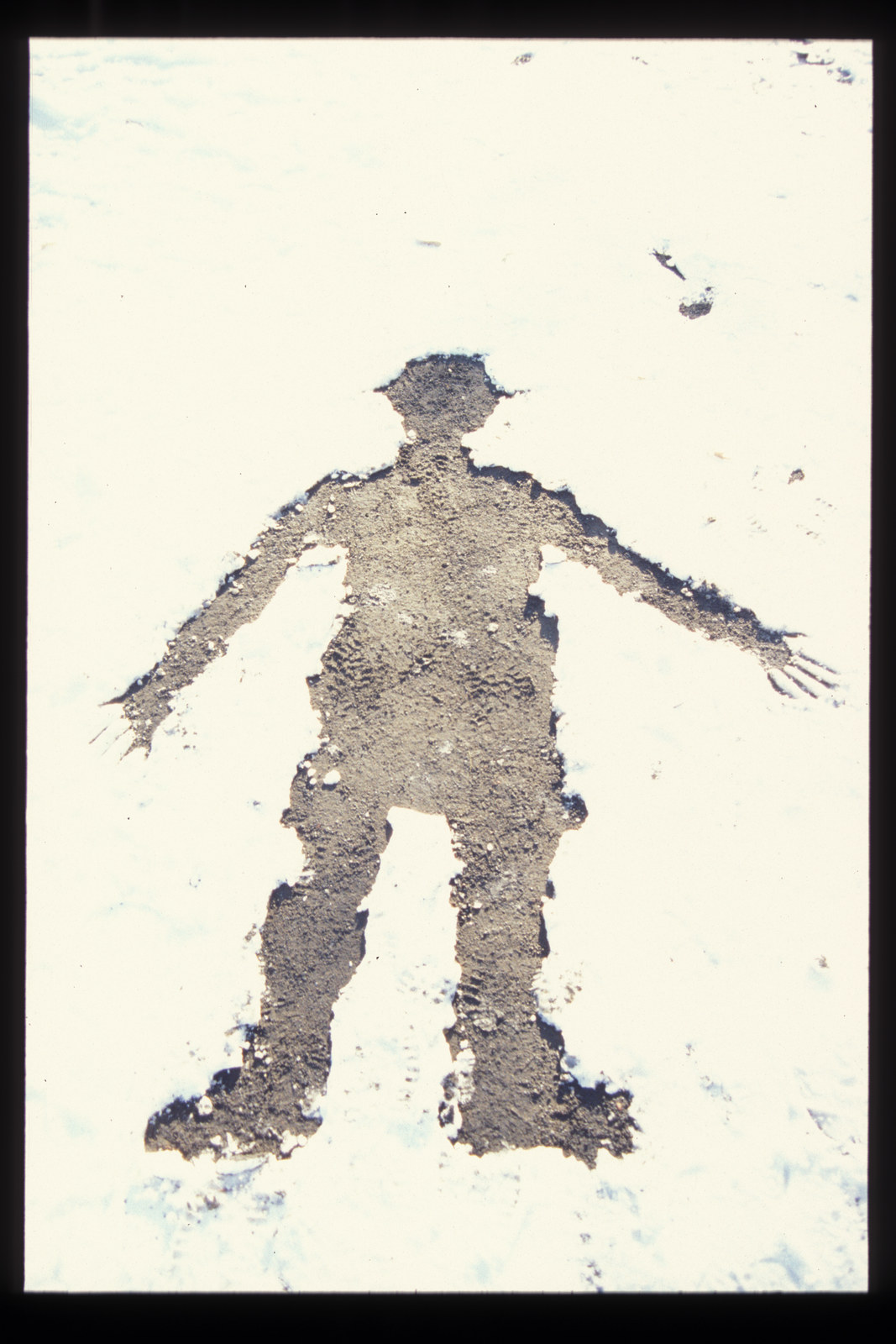
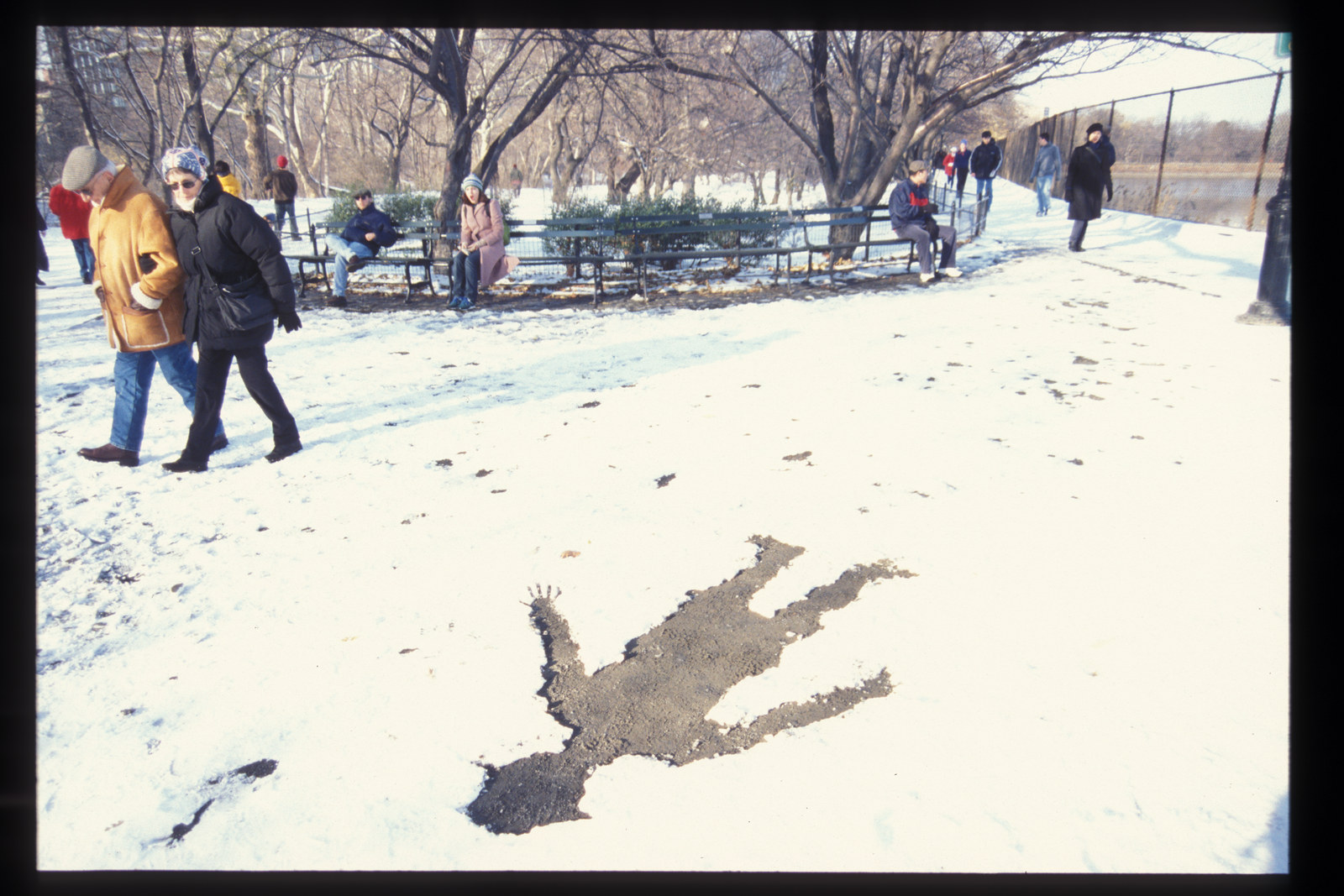
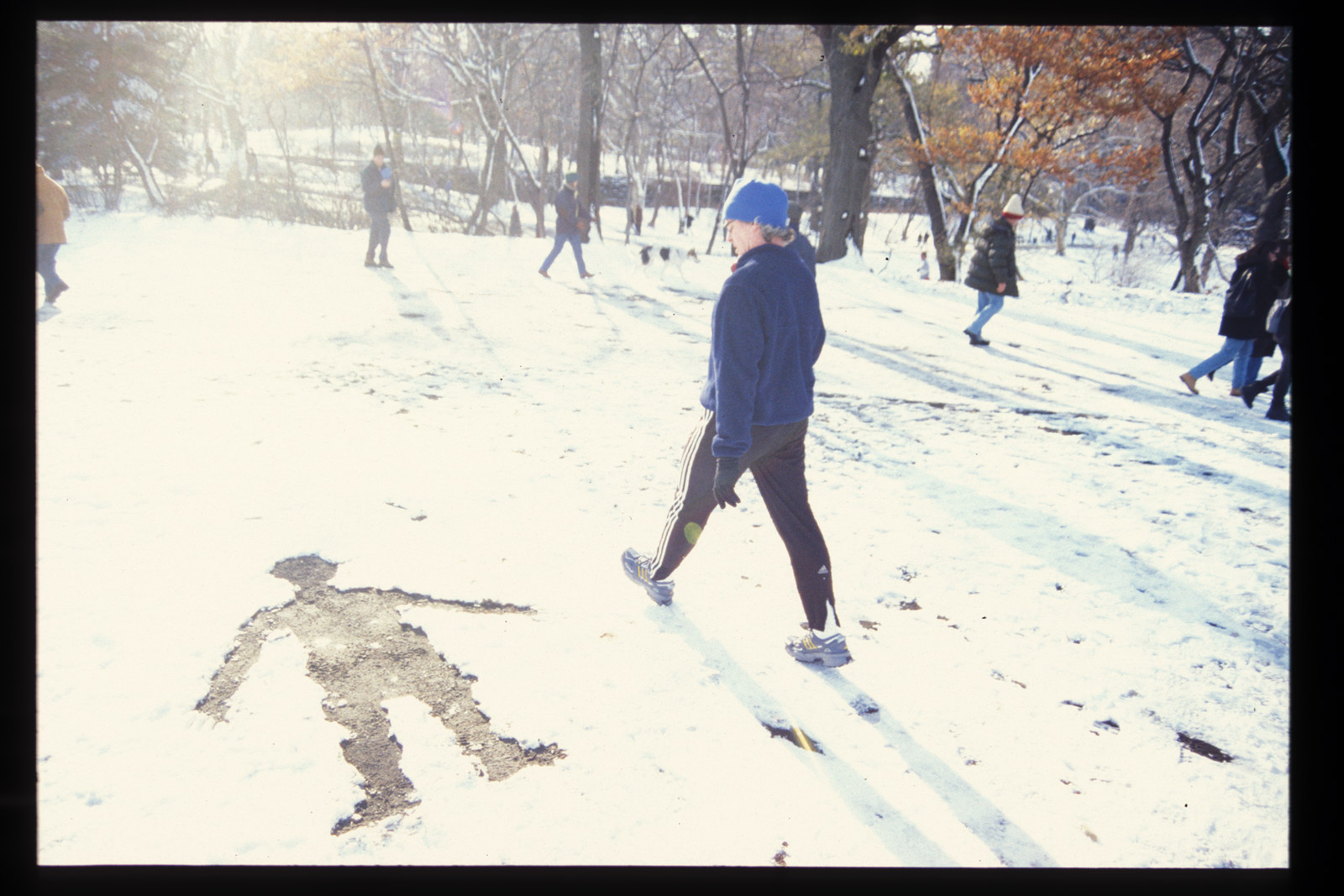
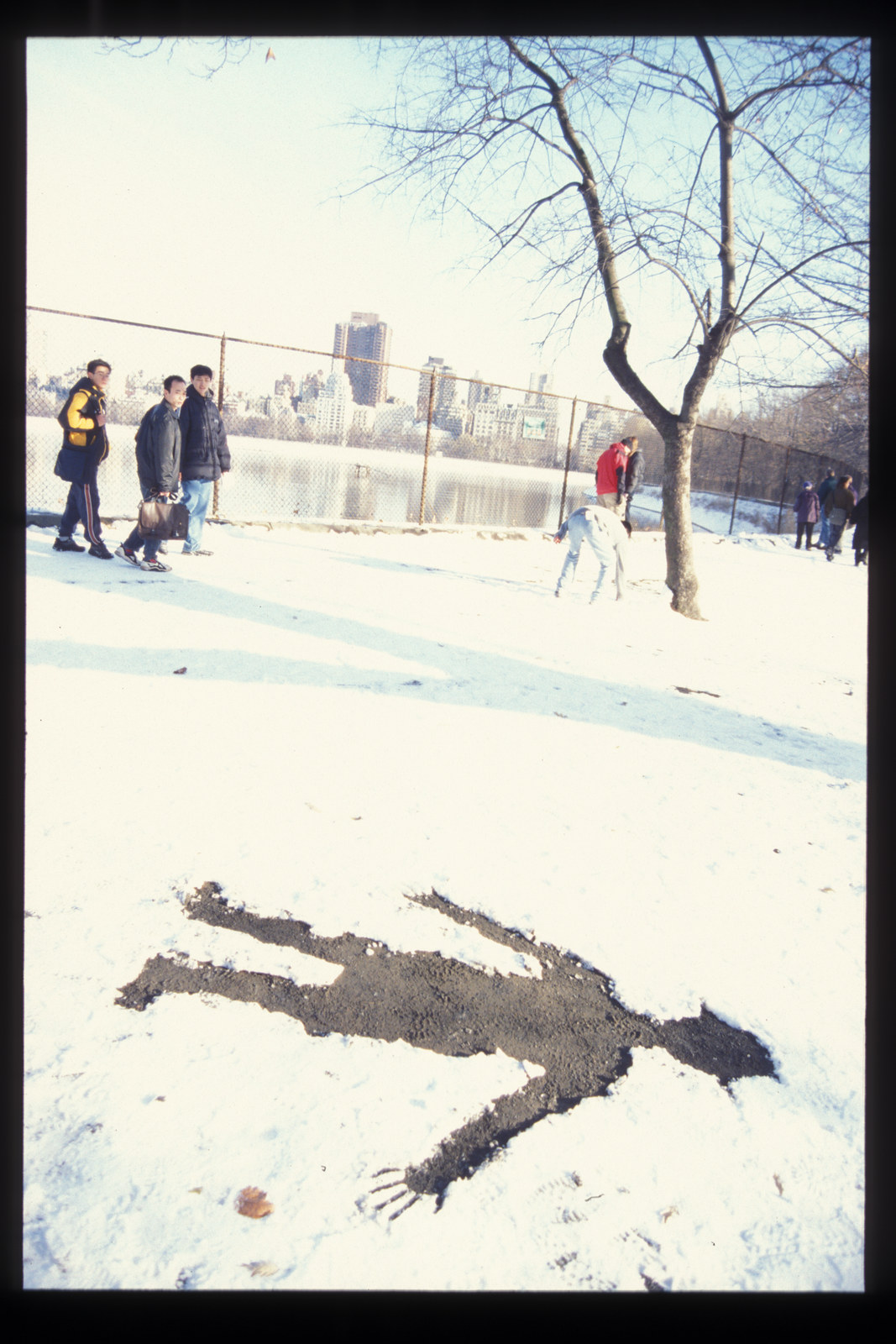
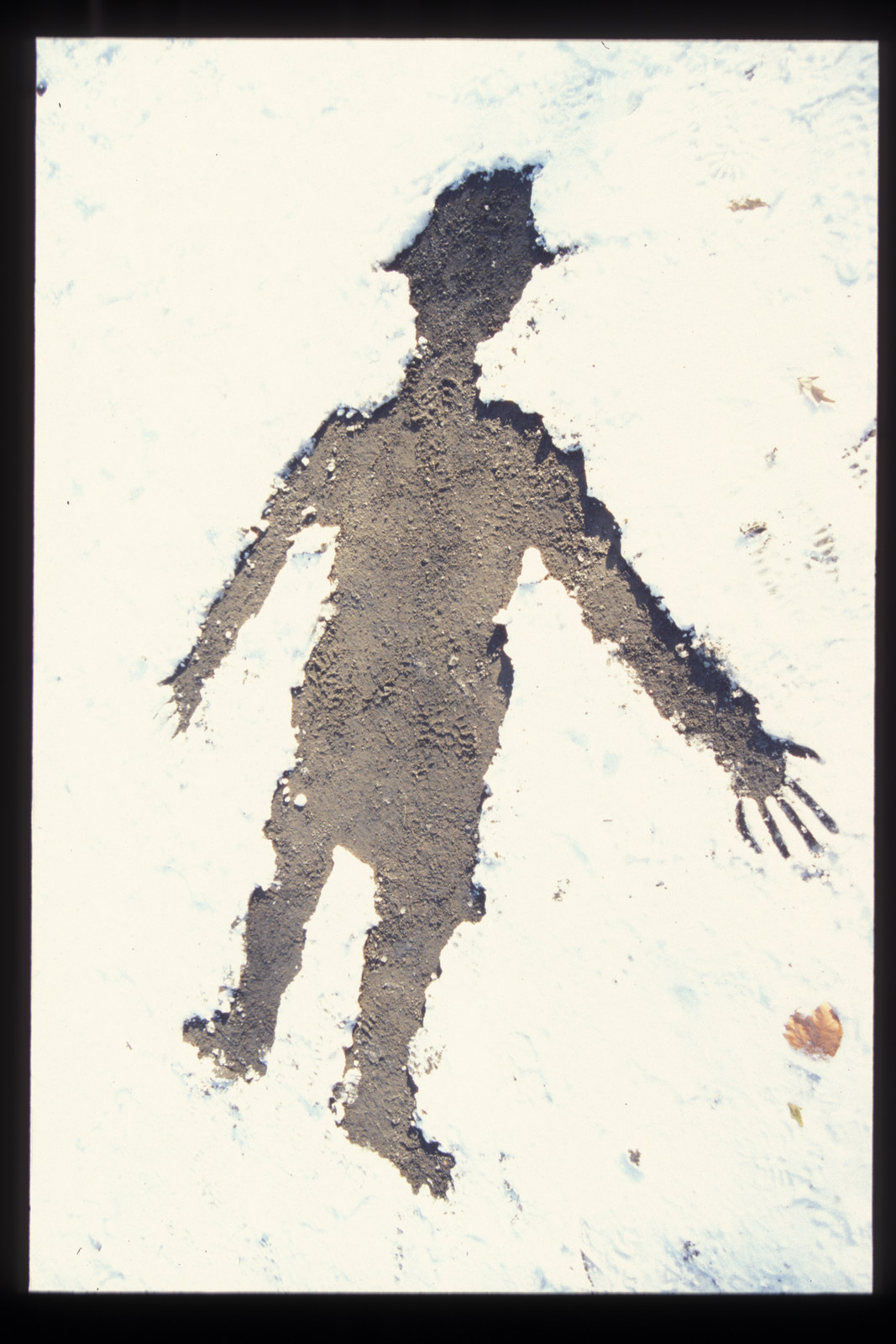
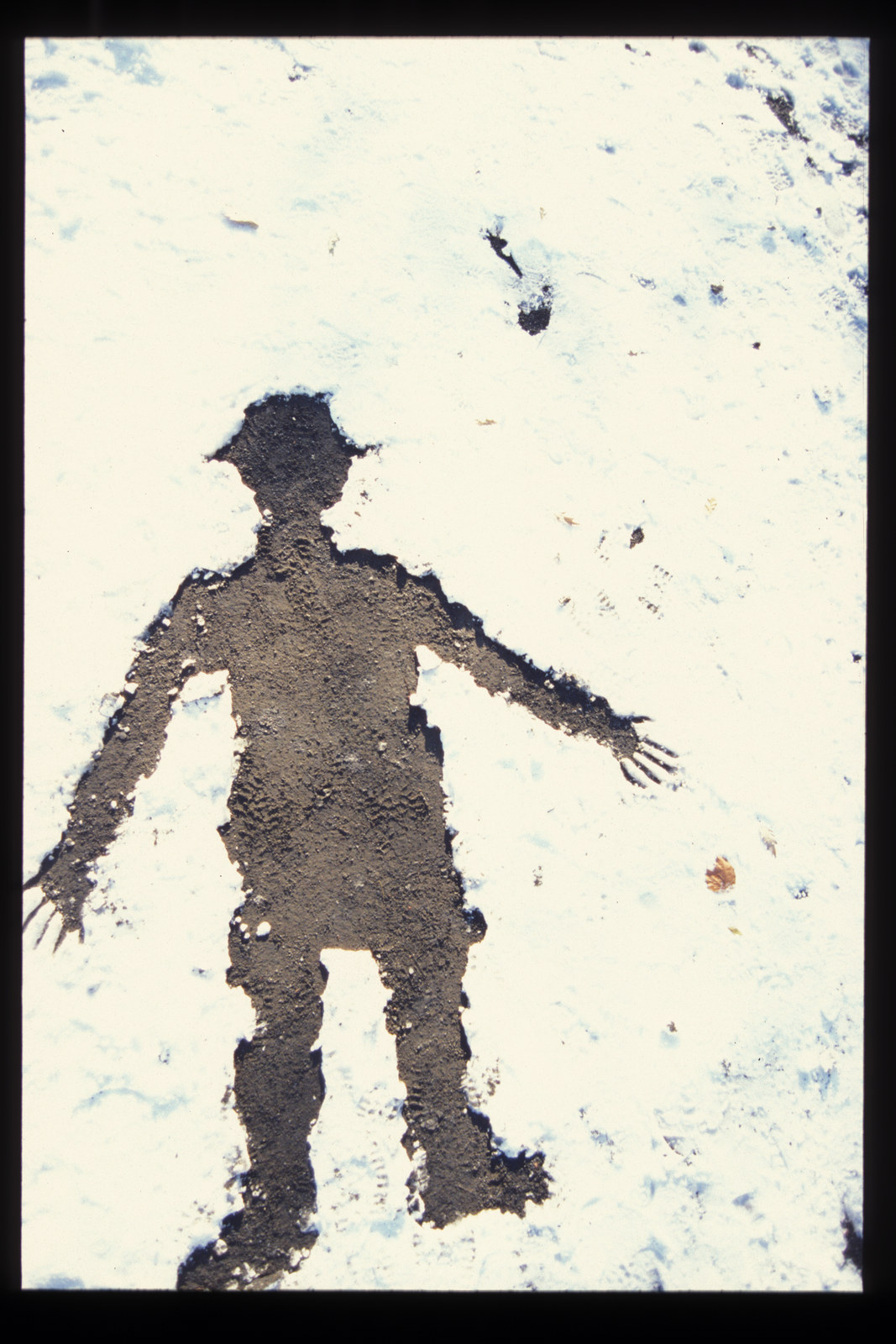
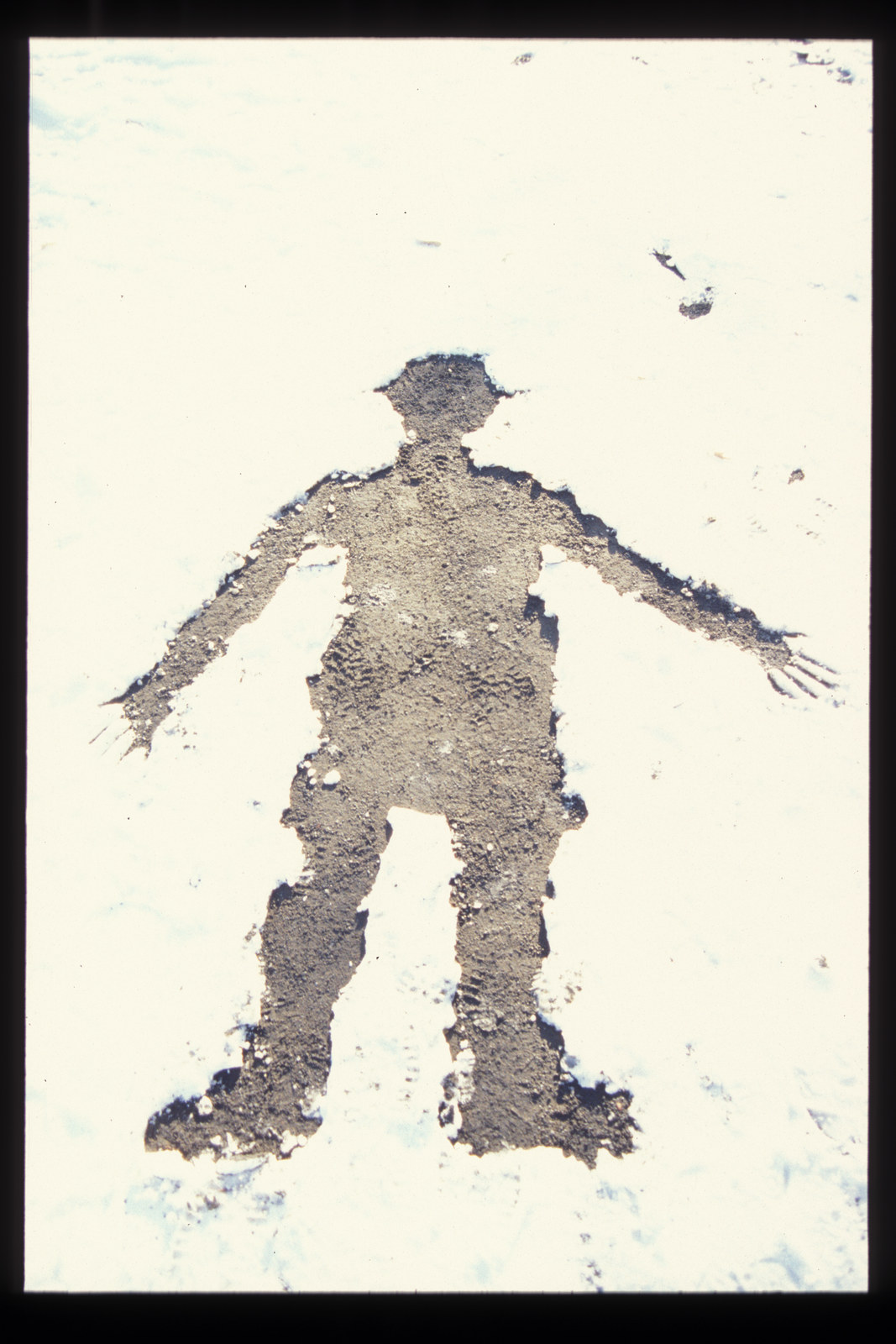
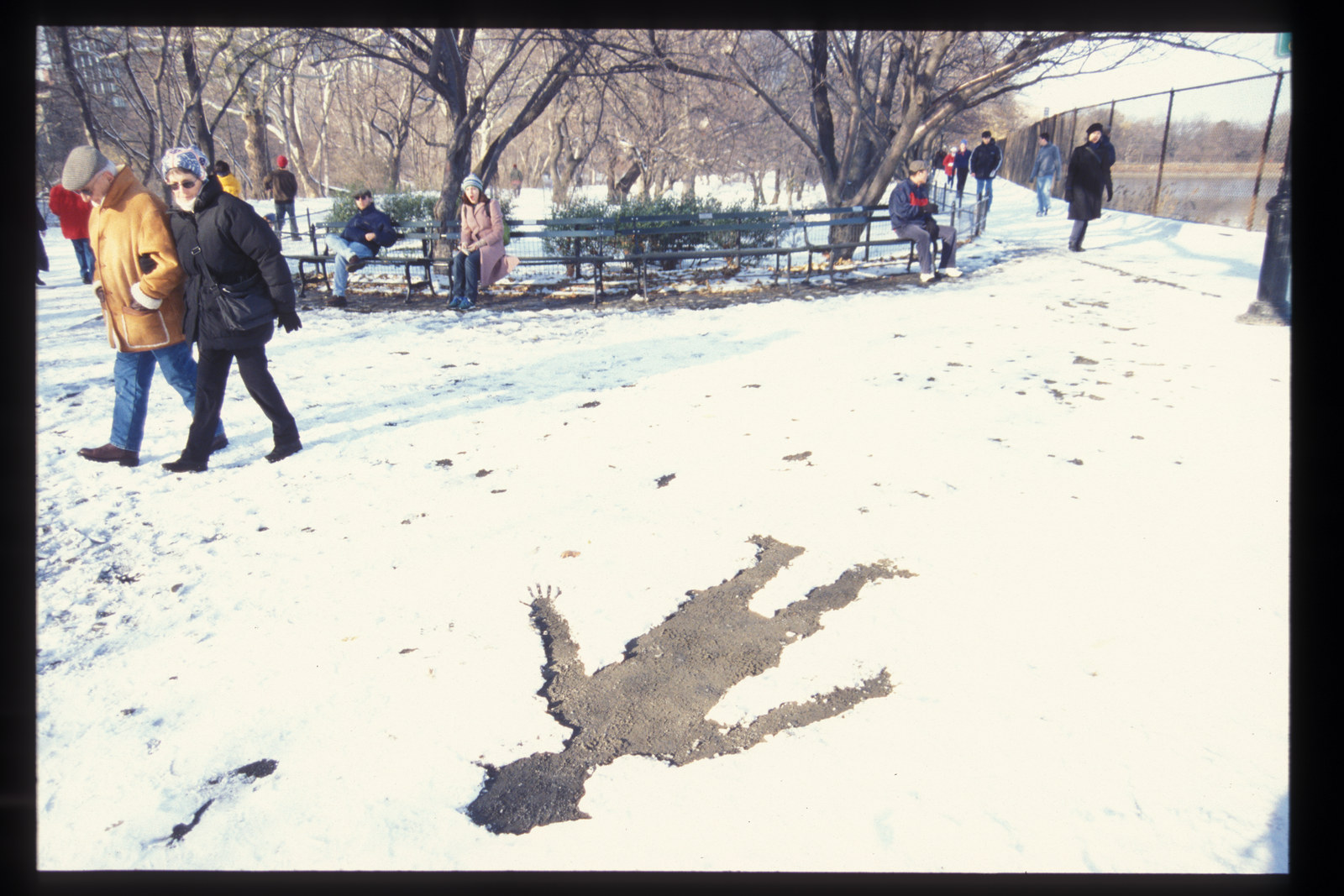
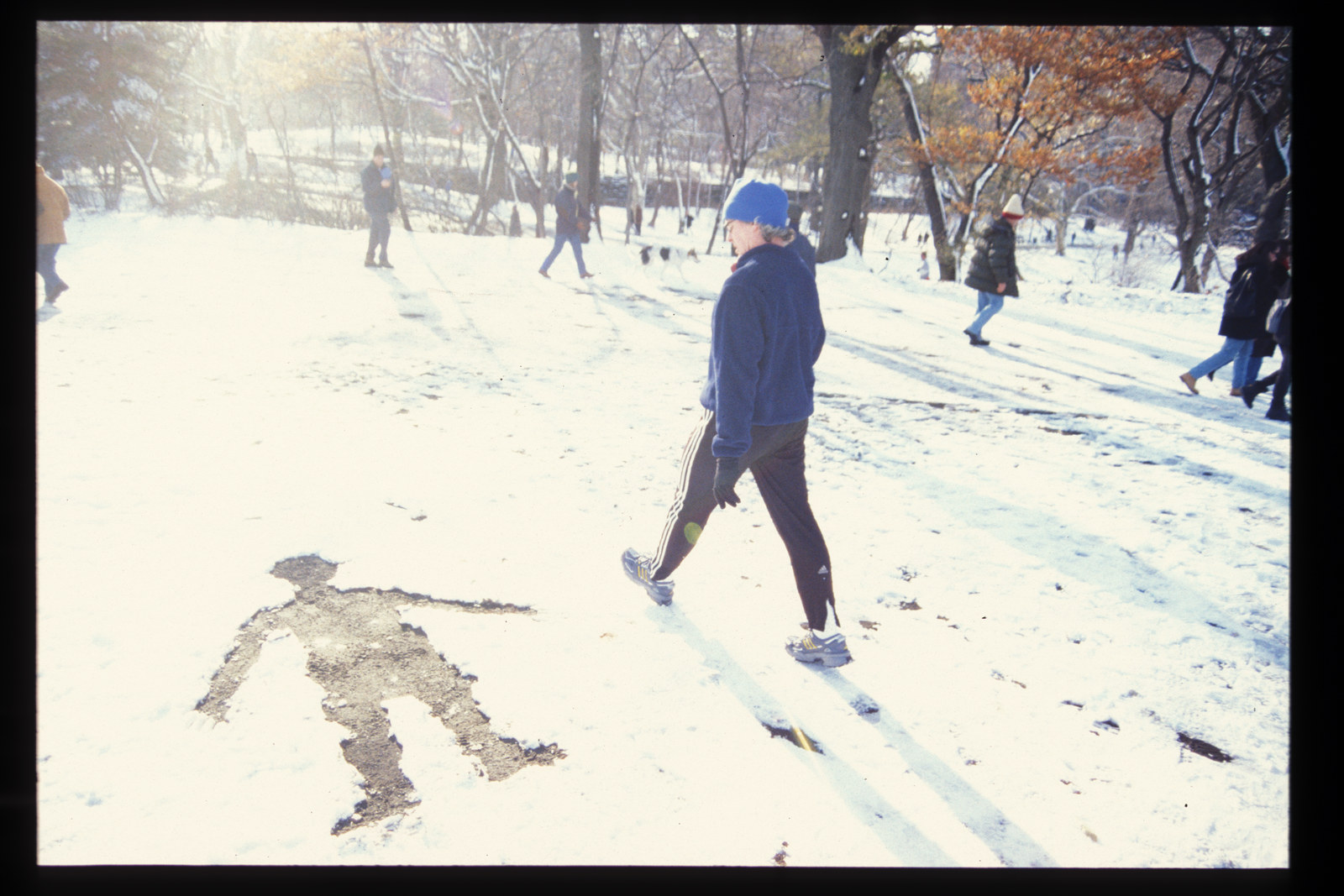
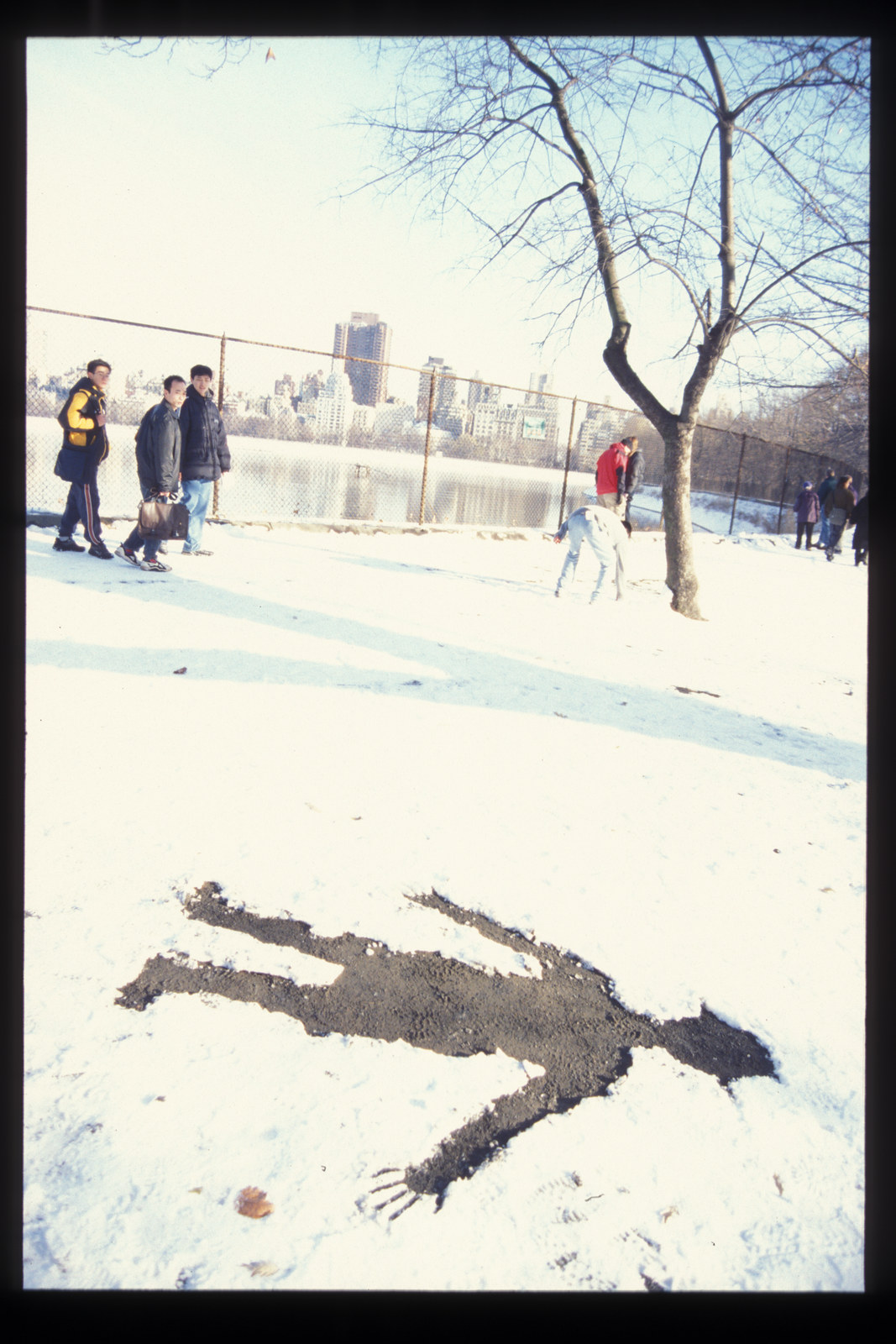
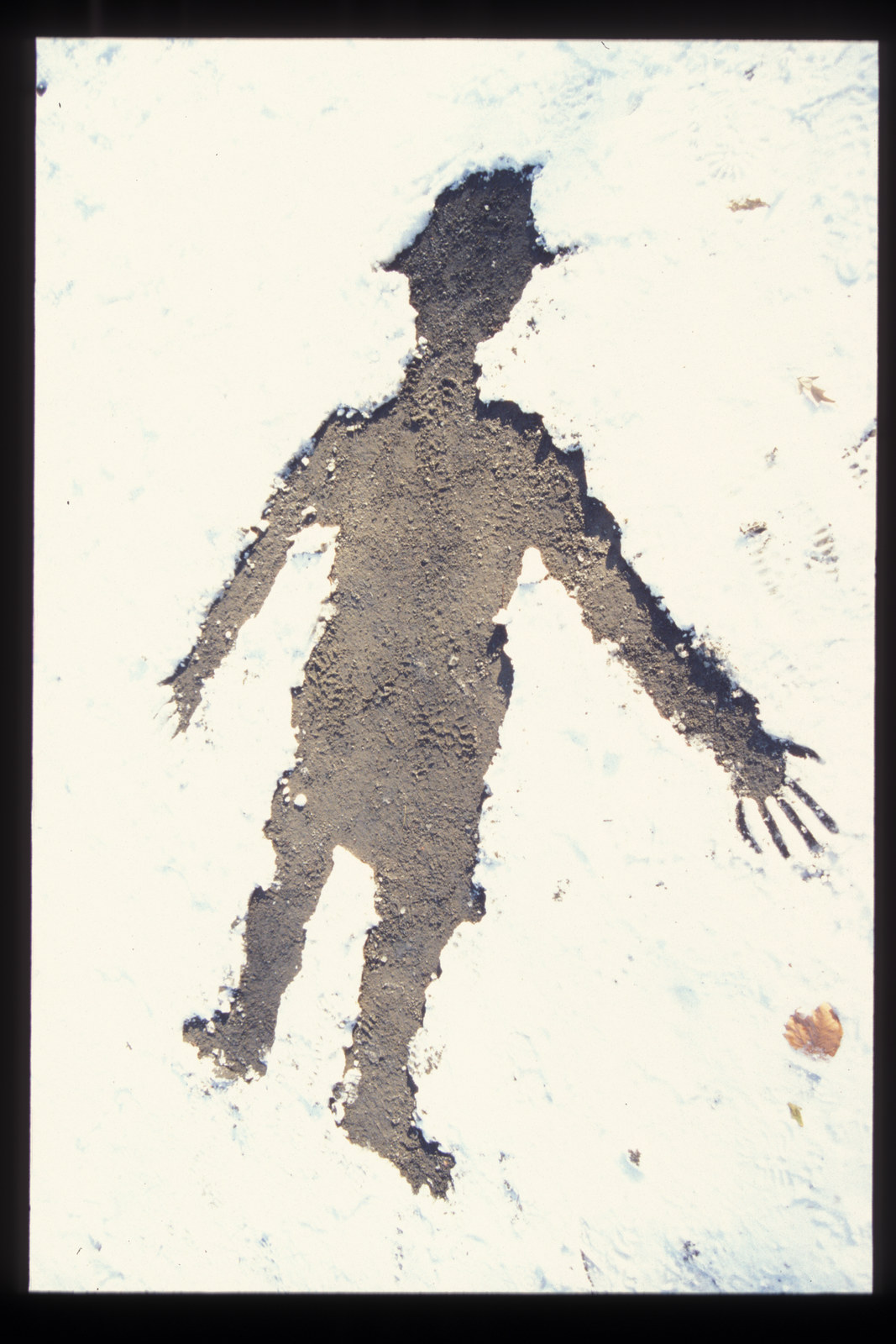
Thomas KuveikisCentral Park between W 87th St and W 86th StHeart Four · Location 354 · Drawn December 2001Download photograph 1Download photograph 2Download photograph 3Download photograph 4Download photograph 5Download photograph 6Video podcast0:00This drawing was done in Central Park in the wintertime.0:03If you wanted to find this drawing's location, you would go to the southwest corner of the reservoir.0:10Between the reservoir and Rest Drive is a wide open area of dirt paths.0:15You can find a water fountain there.0:17In the center of this wide open area is a tree.0:21The tree is labeled on its west side a London Plain.0:25and on its long arm, extending to the north,0:29halfway between the tree and the sitting benches across from it,0:32the drawing was made on the ground,0:35carved out of compacted, cold winter snow.0:38This is Thomas Kuveikis.0:41He was drawn in December of 2001.0:45His drawing is counting ten people.0:48You started this project so soon, after September 11th.0:52What was your thought process on starting this and how much of it was a gut reaction to do something?0:58Gut reaction? Yes.1:01Inevitable, I think, is unfortunately the word I would use.1:04Not in any sort of fatalistic sense, but the back history that leads us to this point1:10has to do with tape art being in Oklahoma City in 1995.1:16In the aftermath of the bombing of the Alfred P. Murrow Federal Building,1:20tape artists and tape art itself was able to actually have a positive impact.1:27I know you don't like to use the first person, but you need to back up there and say.1:30So you went to Oklahoma City and did tape art after the bombing in 1995.1:34We were there. It was incidental.1:36You were there when?1:37We were there during, like, we were supposed to be there for a festival.1:42And we arrived during the bombing.1:45and the festival was cancelled because it was a couple blocks away from the African1:52Mural building and they sent everybody home and we stayed behind with this sort1:56of naive attitude that like hey we put tape on wall surely there's something we2:00can do in this this this national tragedy. We were very fortunate to have2:06some forward-thinking individuals in the Arts Council and their friends in city2:12management and basically they asked us what we could do and we were pretty much2:17game for anything and so in order we worked in the Children's Hospital with2:21the children from the bomb site we worked in the schools closest in2:24proximity to the bomb site and then we actually got into the heart of the2:28rescue operation and in the rescue operation our location was just2:34catty-cornered to the main door that all the firemen and all the rescue operators2:39came in and out of. So we were pretty much the only non-medical, non-emergency2:44personnel in the entire space making a three-story high tape art mural. This is2:50a very bizarre space to be in and at that time it's helped to redefine what2:57tape art was as a process, as a philosophy, and because of the close3:04connection between tragedy, terror, firemen, health and healing and since that time in 95 we've been3:14working consistently in hospitals sort of keeping the vocation of tape art moving forward that3:22inevitably when something like this happens we had a studio in Jersey City right across3:28across the river from the disaster.3:32And within a week, I had come up with a plan that took a little bit of fine tuning and3:37actually is a lot smaller than the initial impulse, which was just to draw everybody.3:43And at the time was a number that was up over 3 or 4 thousand, possibly as high as 5 thousand,3:50nobody knew.3:51And we devised a system and the system has been evolving with a group of people over3:55over the course of the last four or five years.3:58I didn't fully appreciate,4:00even though I've known you for a while,4:01that you were in Oklahoma City4:03at the time of the bombing and making tape art.4:05It helps me understand, I mean,4:07in terms of just building up some sort of background4:09for understanding how your work can respond4:11to an event like this.4:14I mean, that is the only other event4:16that we have to compare this to in a certain way.4:19That's true, and I think the comparison does exist.4:21It really needs to be said, too,4:23that last year all the people have been working on the on the hope project the whole project being4:30the collective umbrella by which we described oklahoma city all the hospital work and you know4:36this new york city oh really they're all part of the same all part of the same thing and so you you4:42stand before uh four people who returned to oklahoma city um there were eight of us in total4:48that actually went back to Oklahoma City on the 10th anniversary of the bombing.4:54I was the only one that was there, primarily because I was born earlier.4:58And now that we've all been working together on this act of remembrance,5:05we rented ourselves a van and set out to Oklahoma City and did a week of volunteer work there5:10and did our best to try to, at least for ourselves, make that connection5:15and make sure that there is a connection.5:20It is very easy to sort of forget about it.5:23He was a big-hearted, soft touch, an avid vegetarian,5:28and an awful businessman when it came to his carpentry jobs.5:32But as a firefighter, he was unusually aggressive.5:37His father, who was also a firefighter, was a legendary...← Location 353Heart Four · Location 354Location 355 →